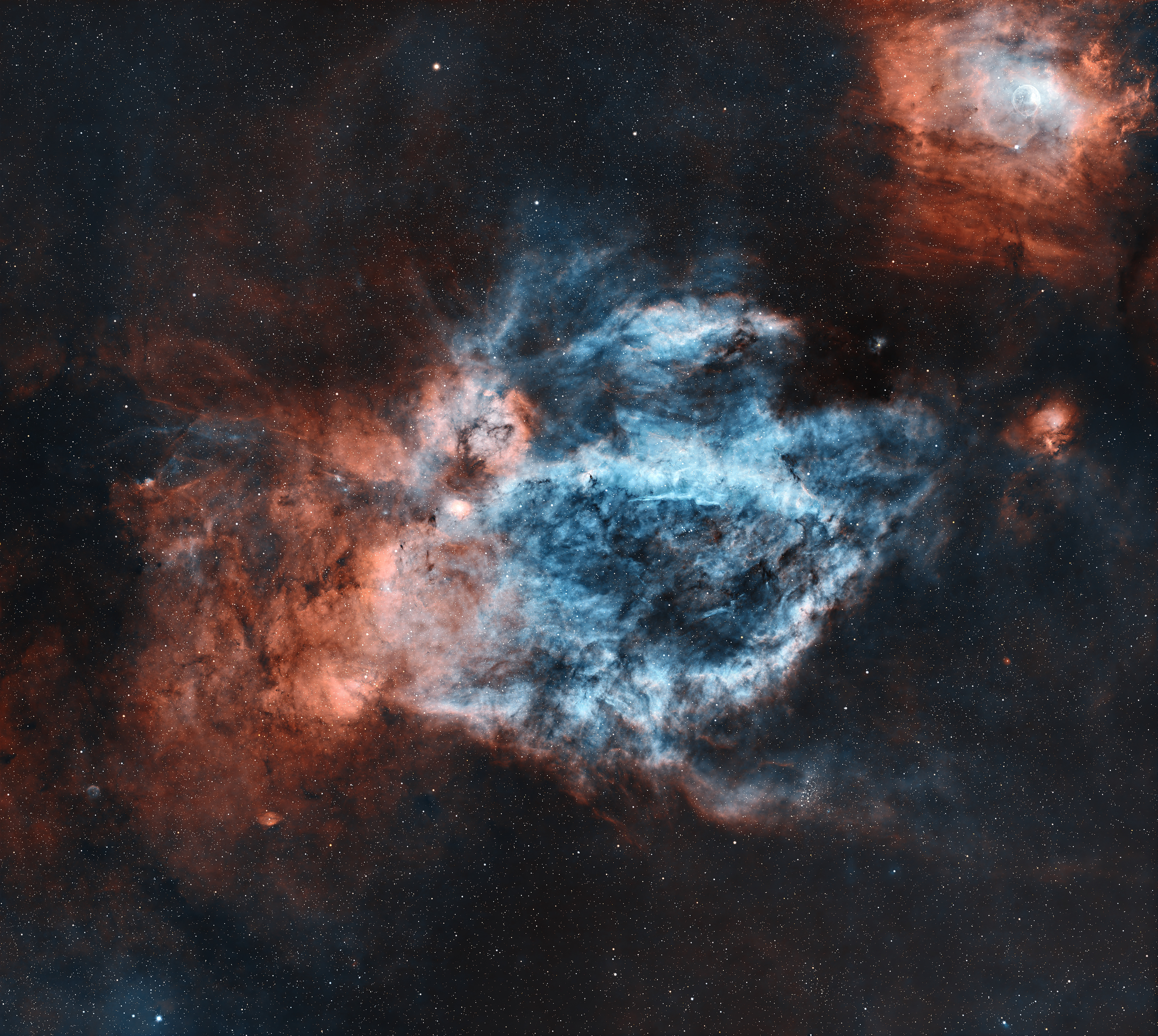
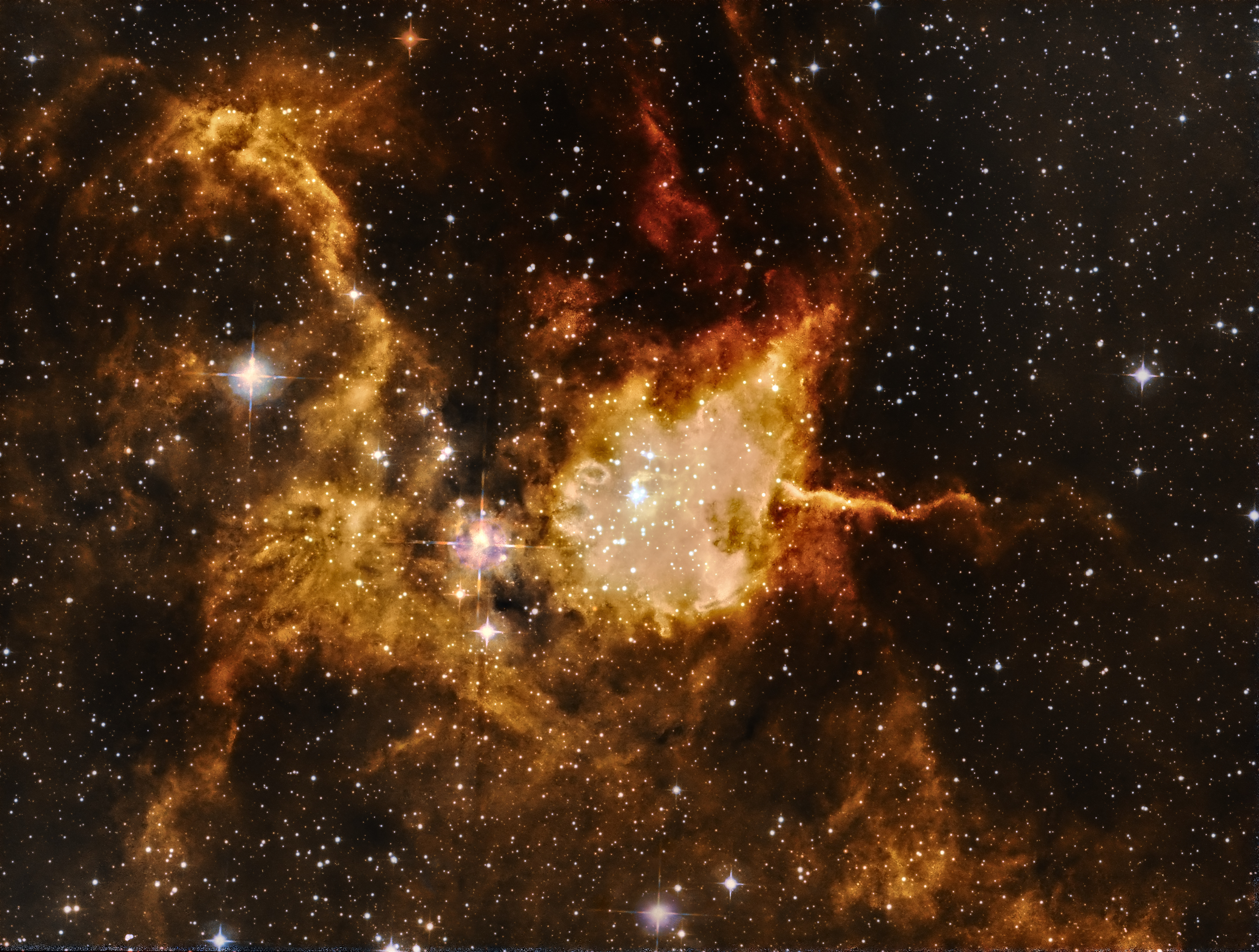
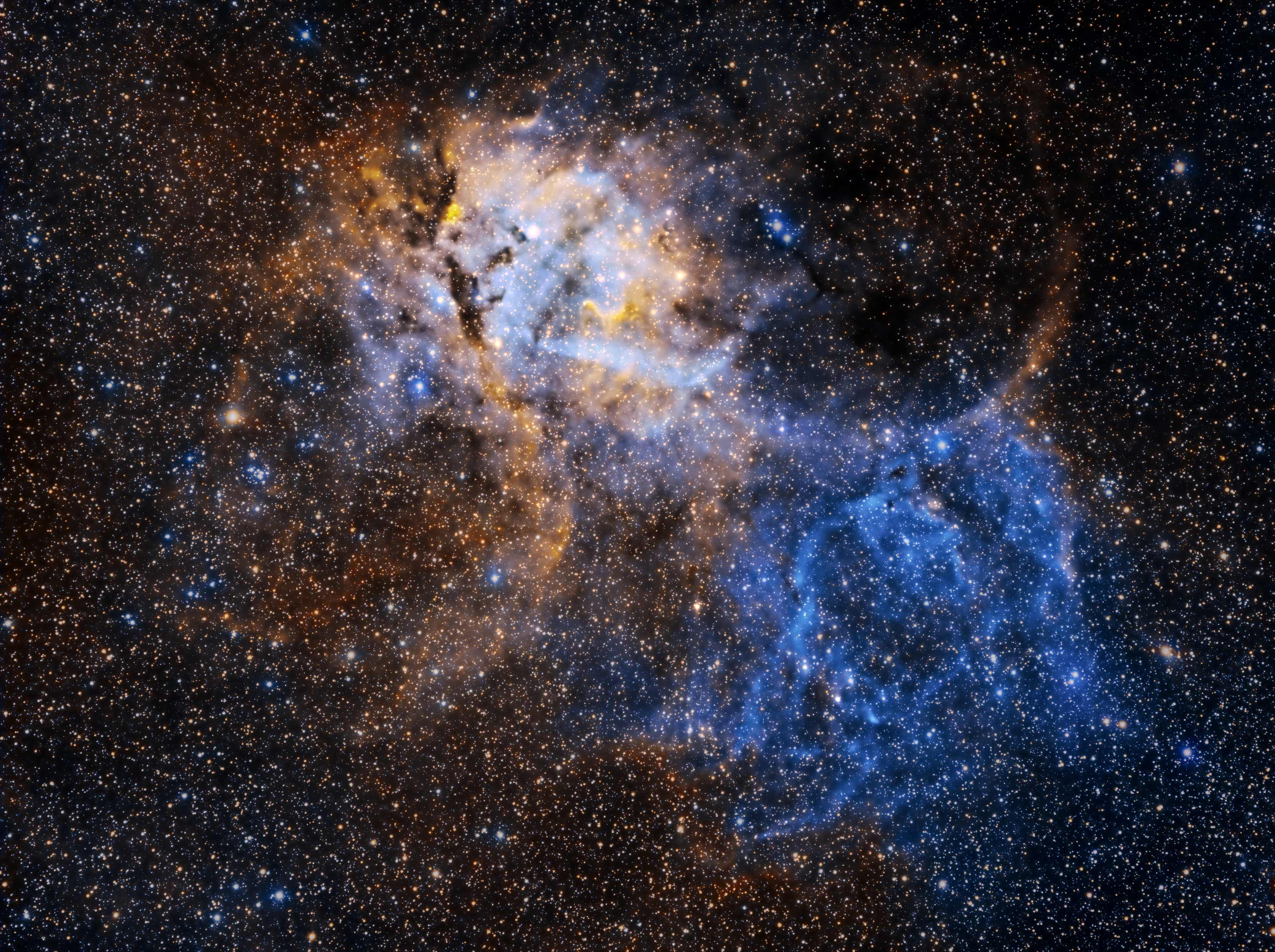
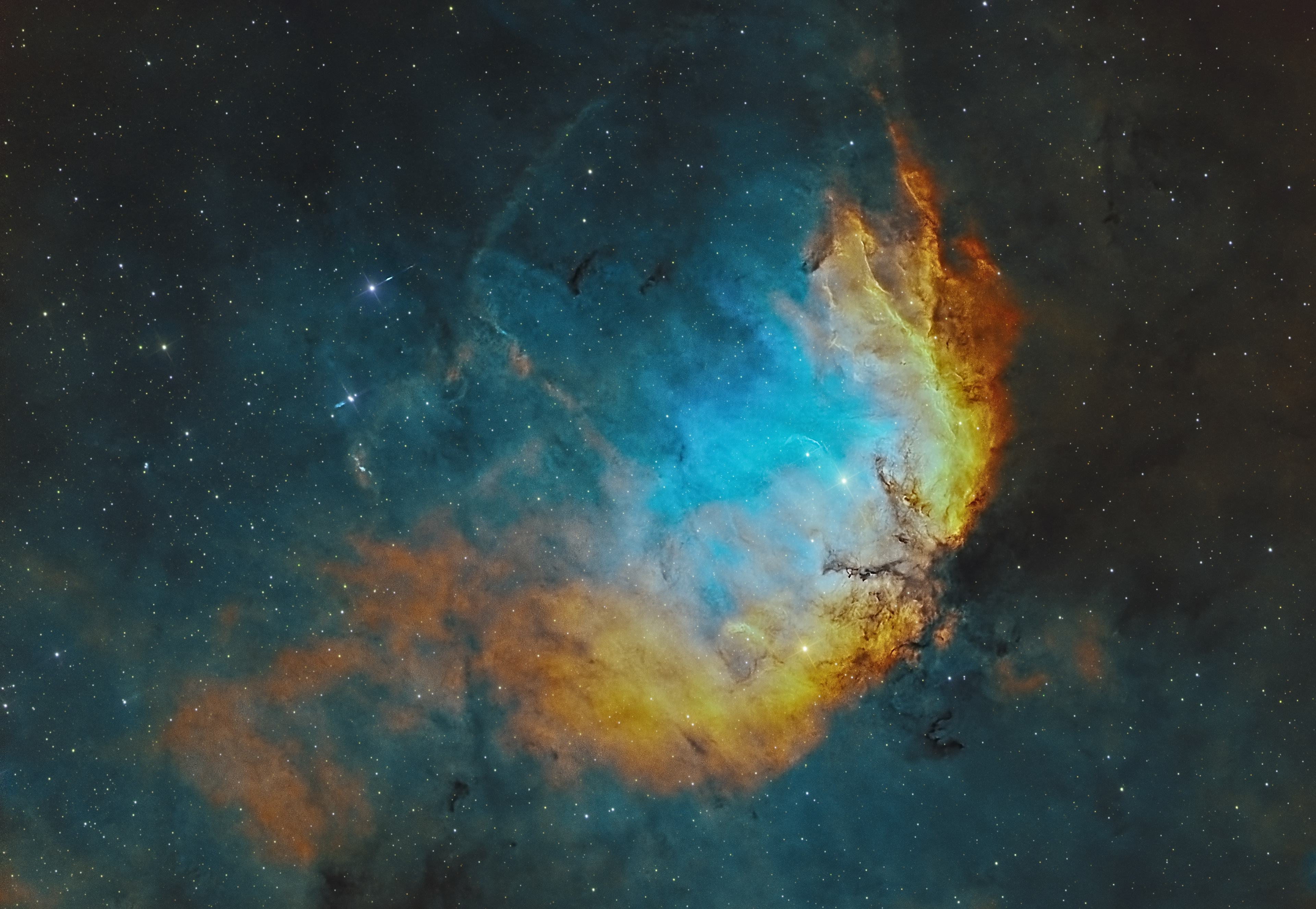
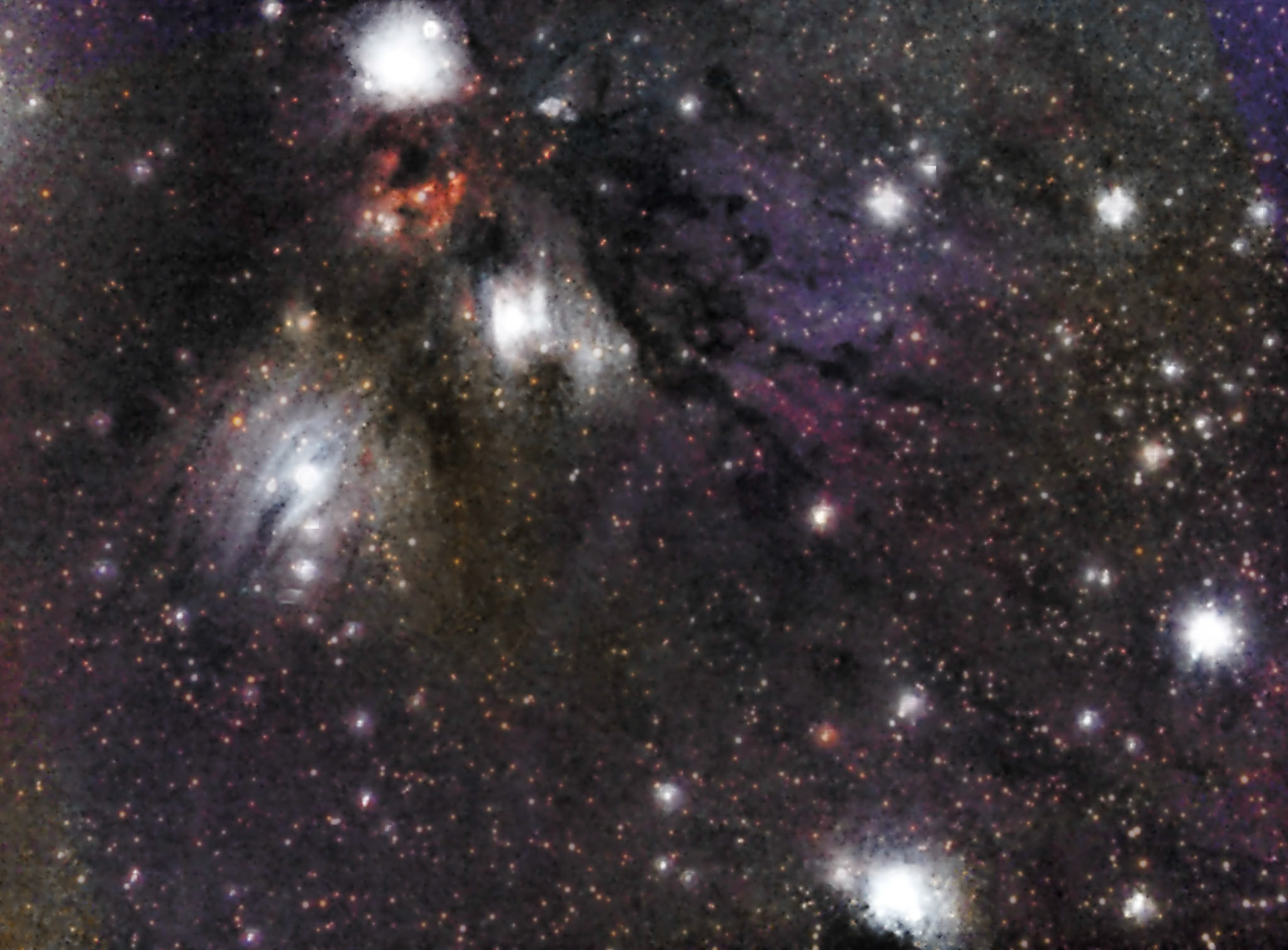
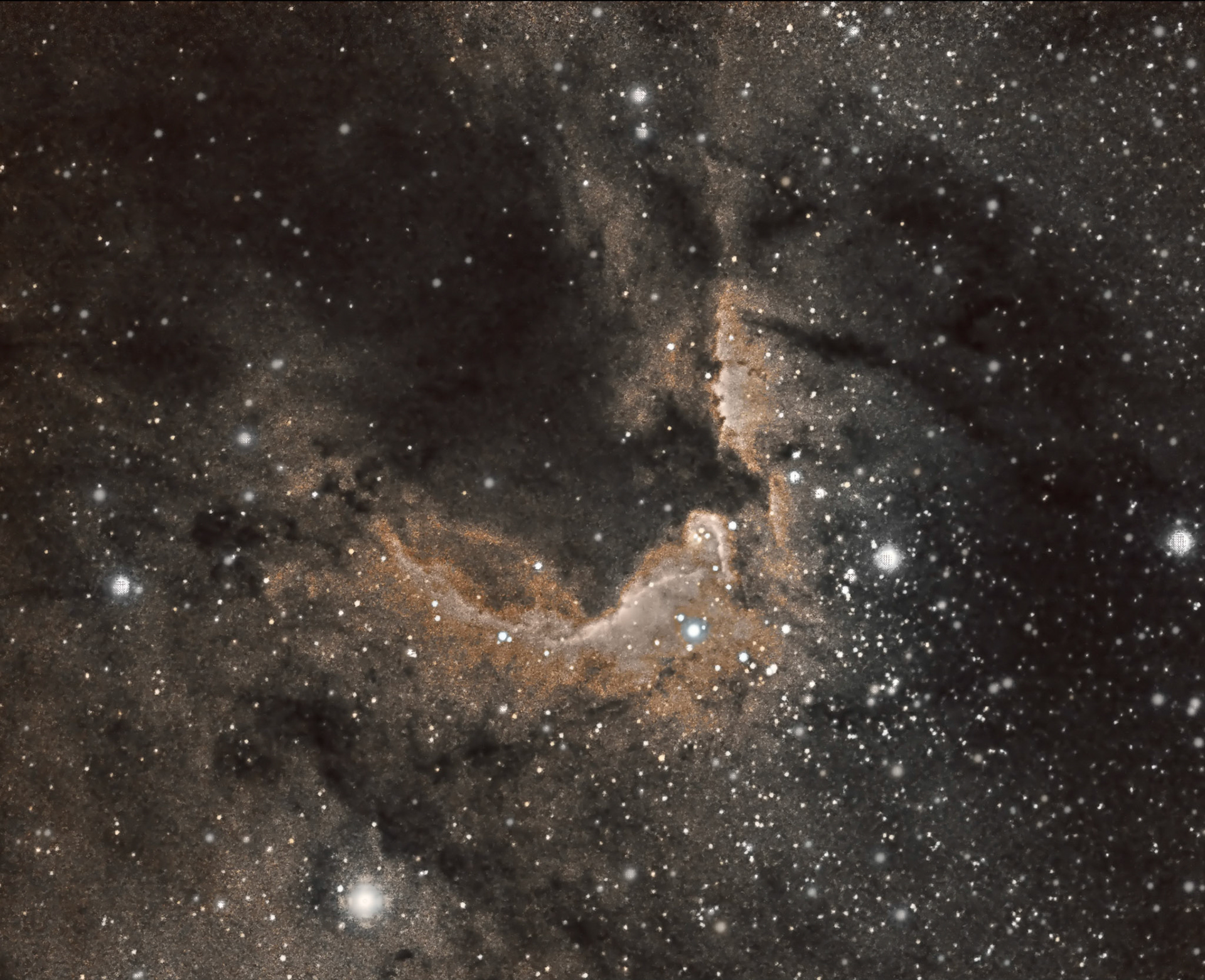
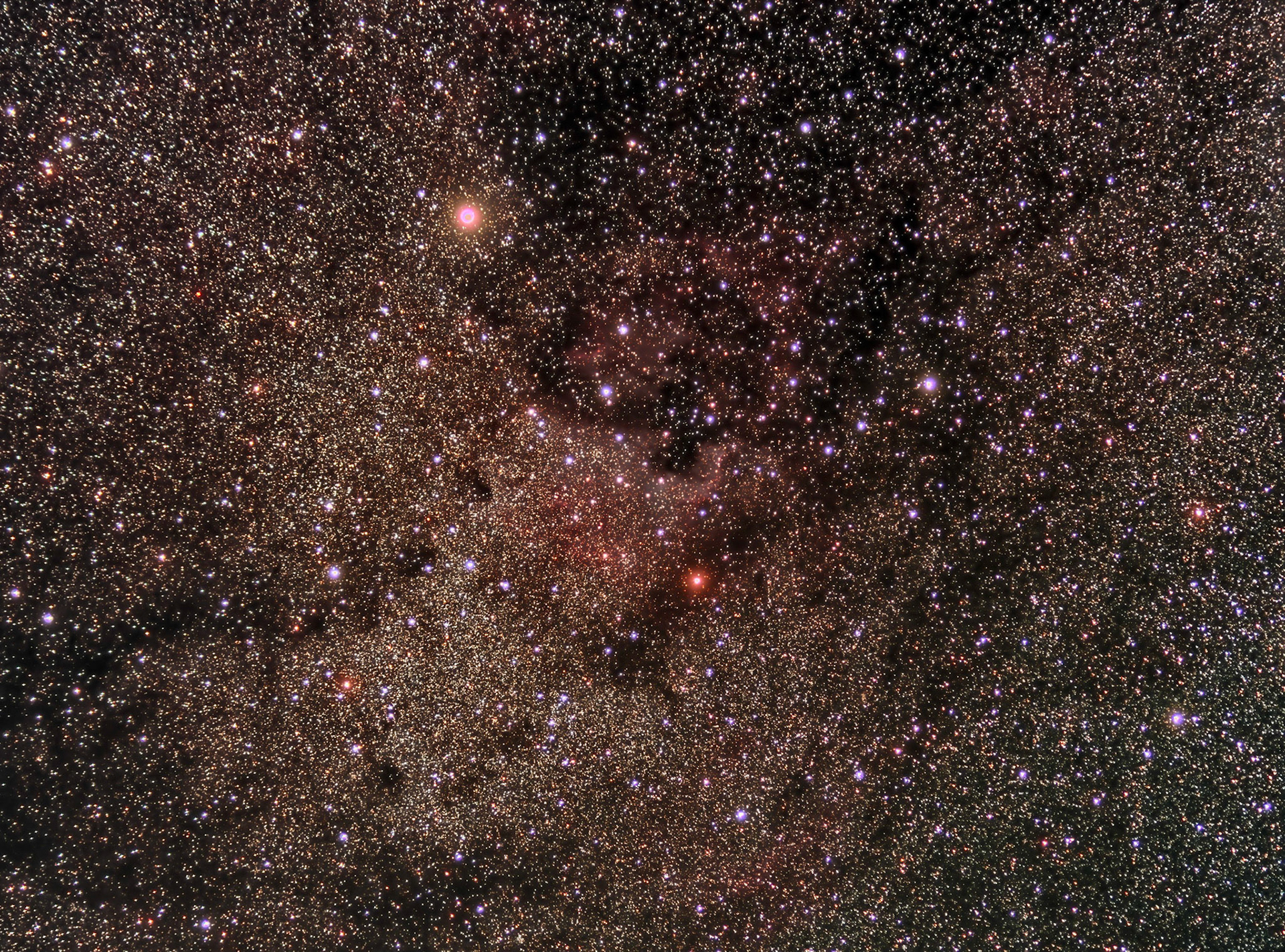
Lobster Claw Nebula Sh2-157
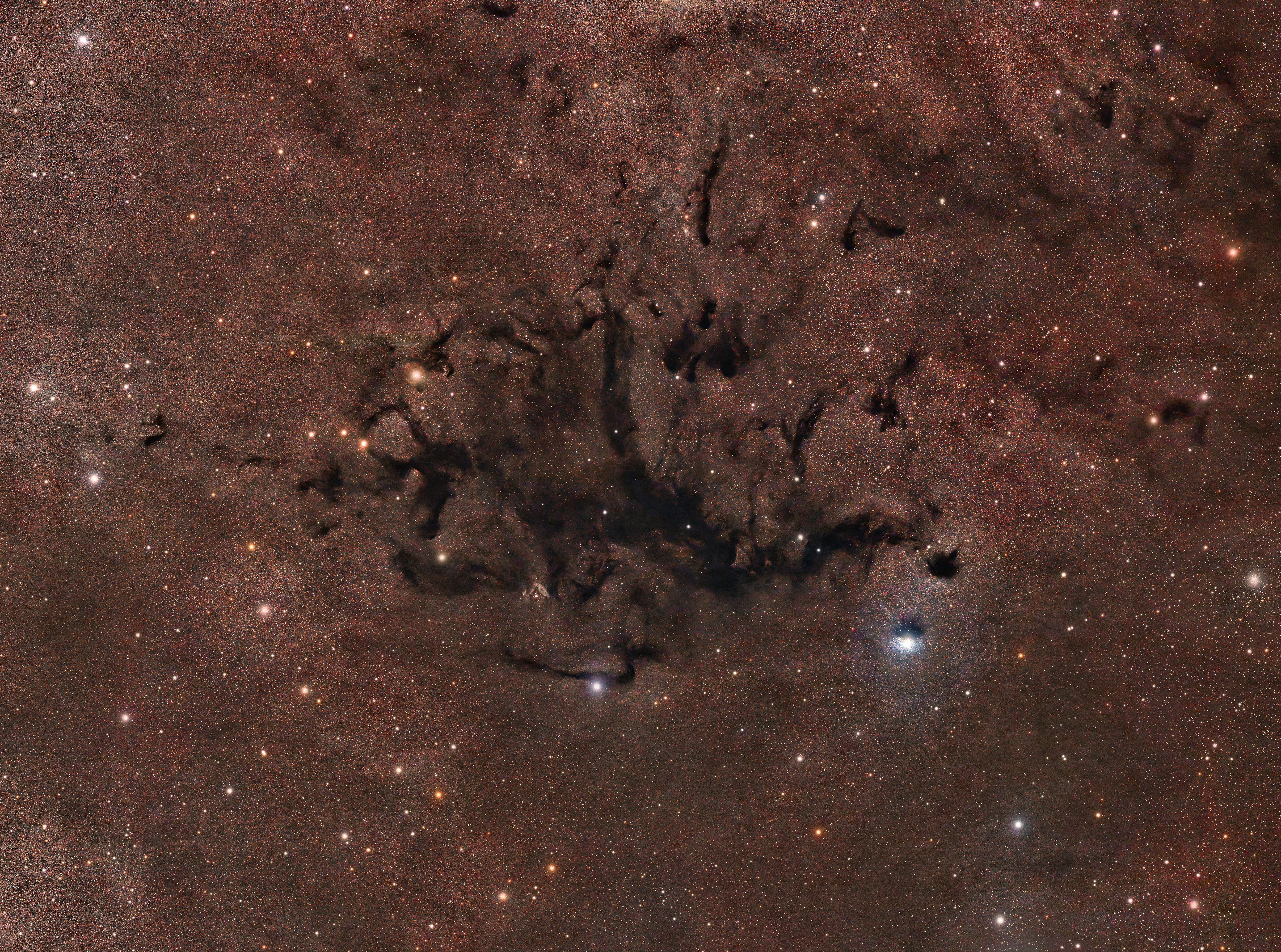
Dark Nebula LDN 673
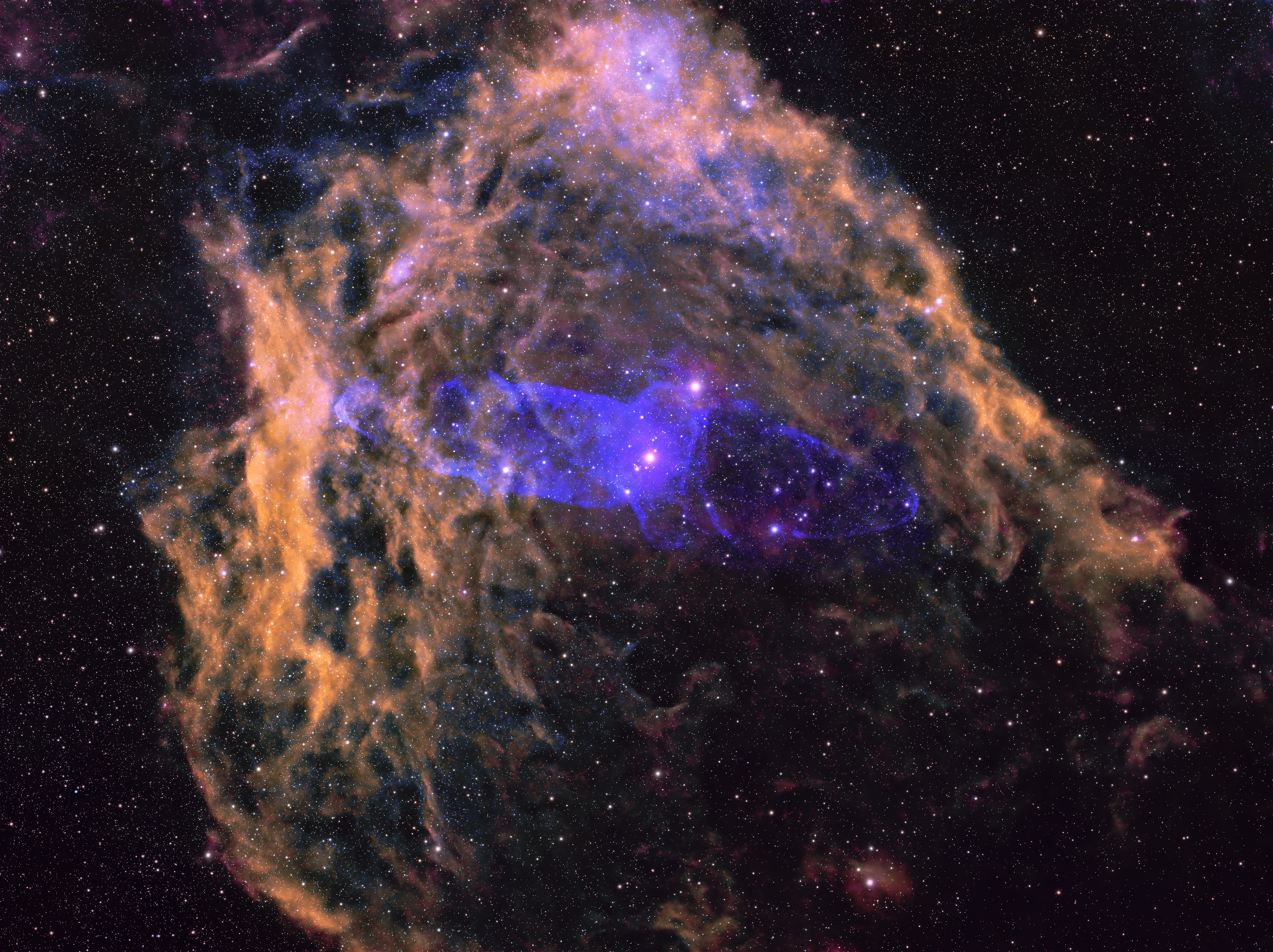
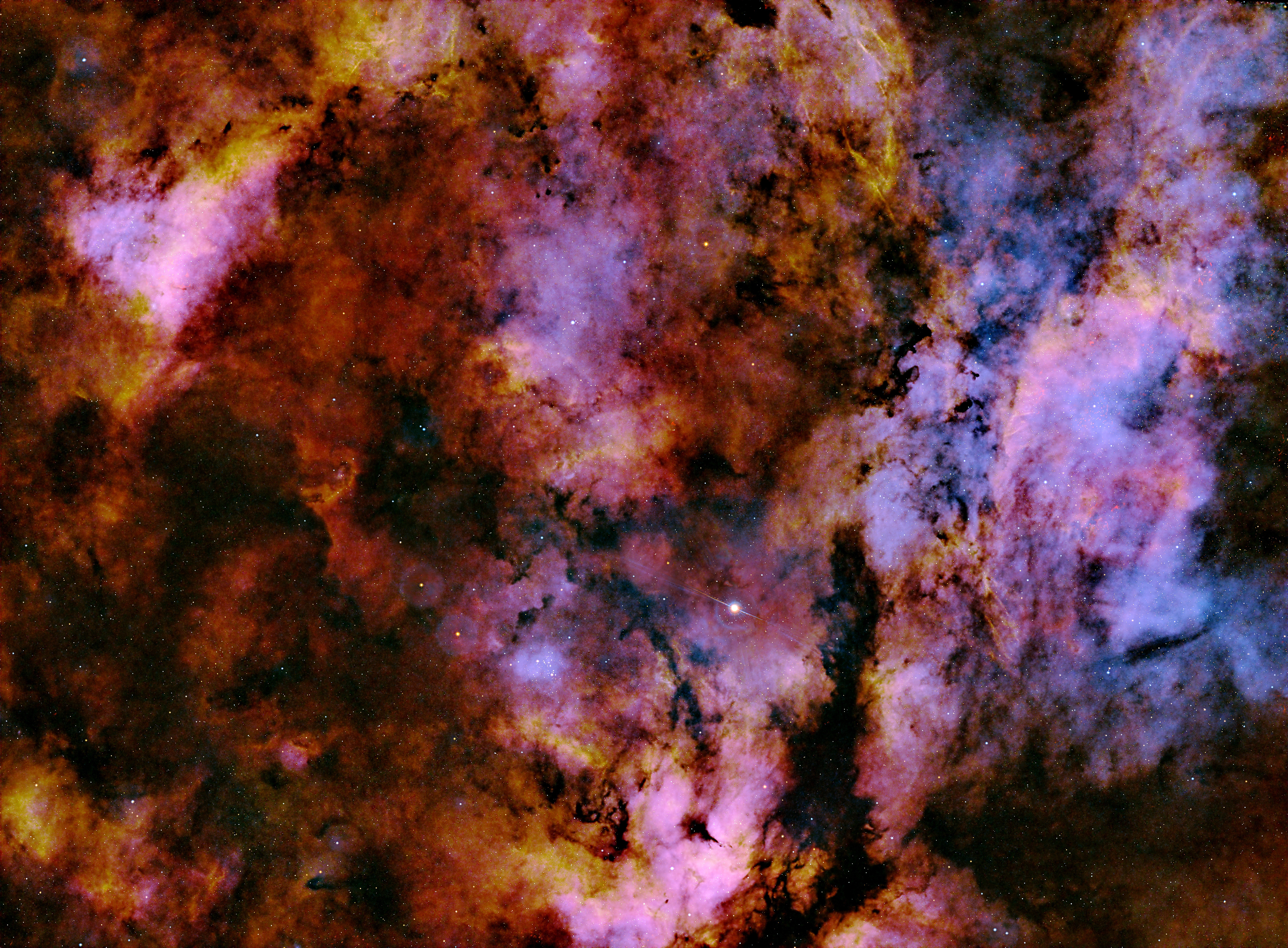
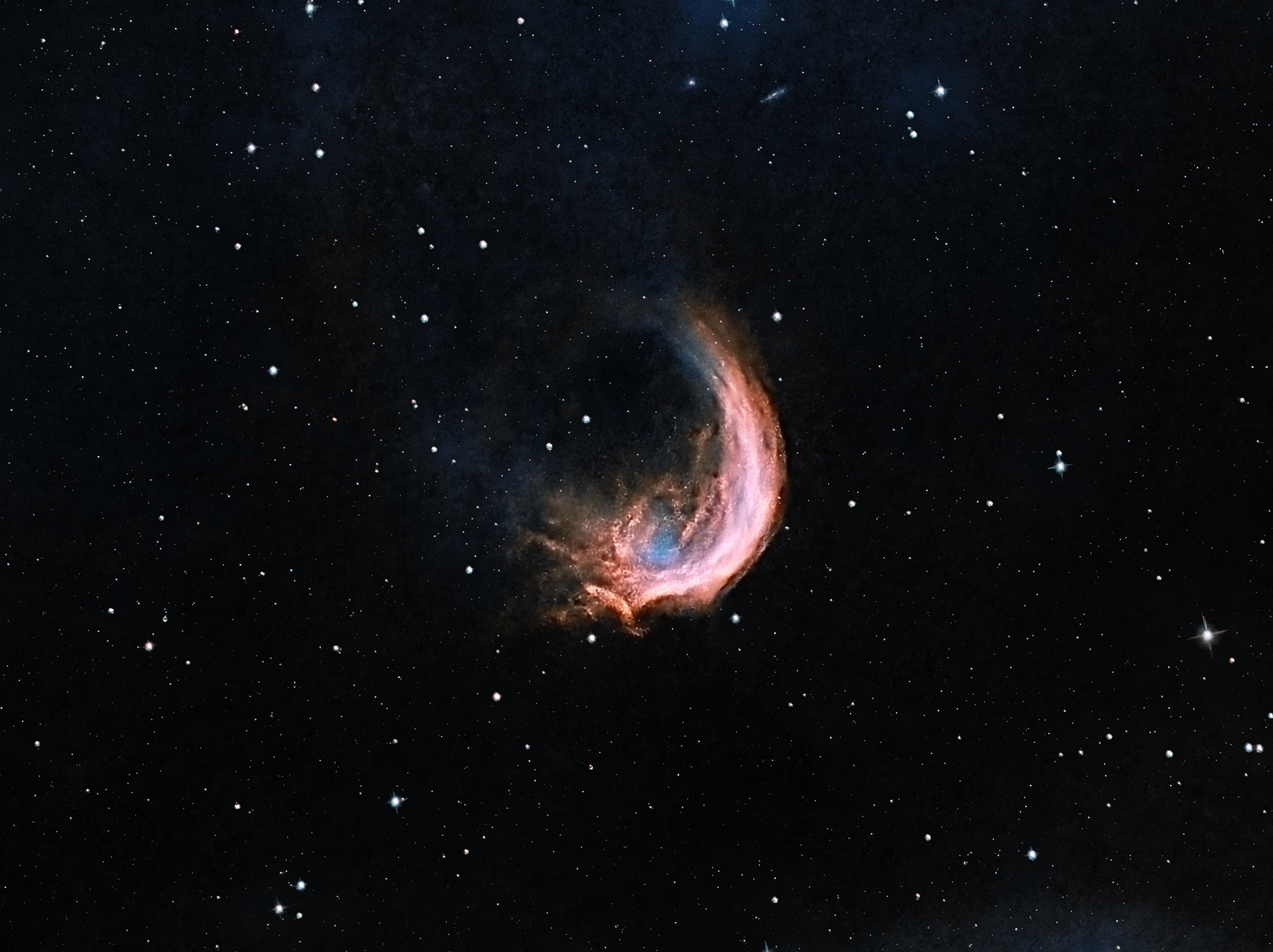
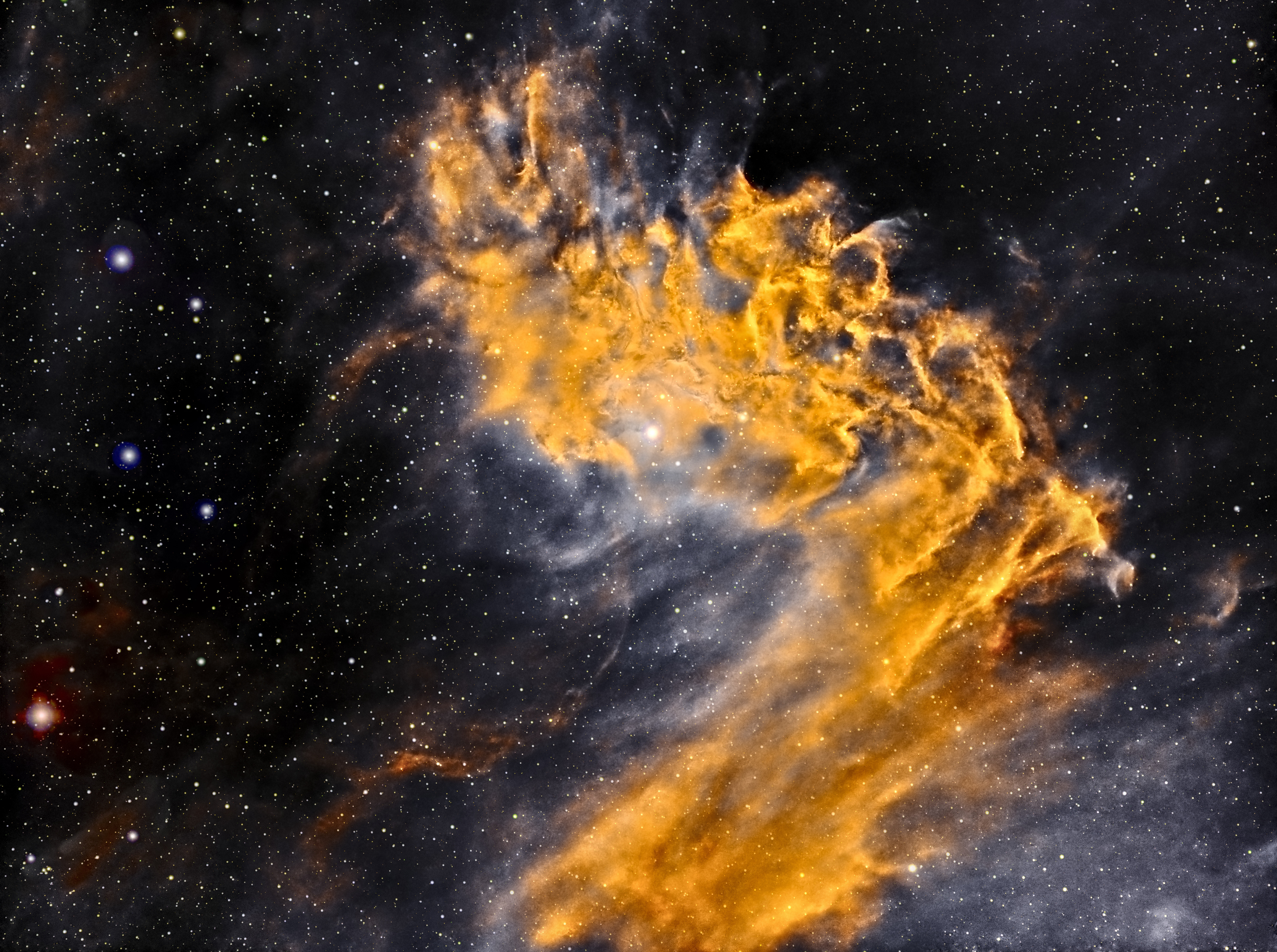
Flying Bat Nebula SH2-120 and Squid Nebula Ou4
Barnard 150 B 150
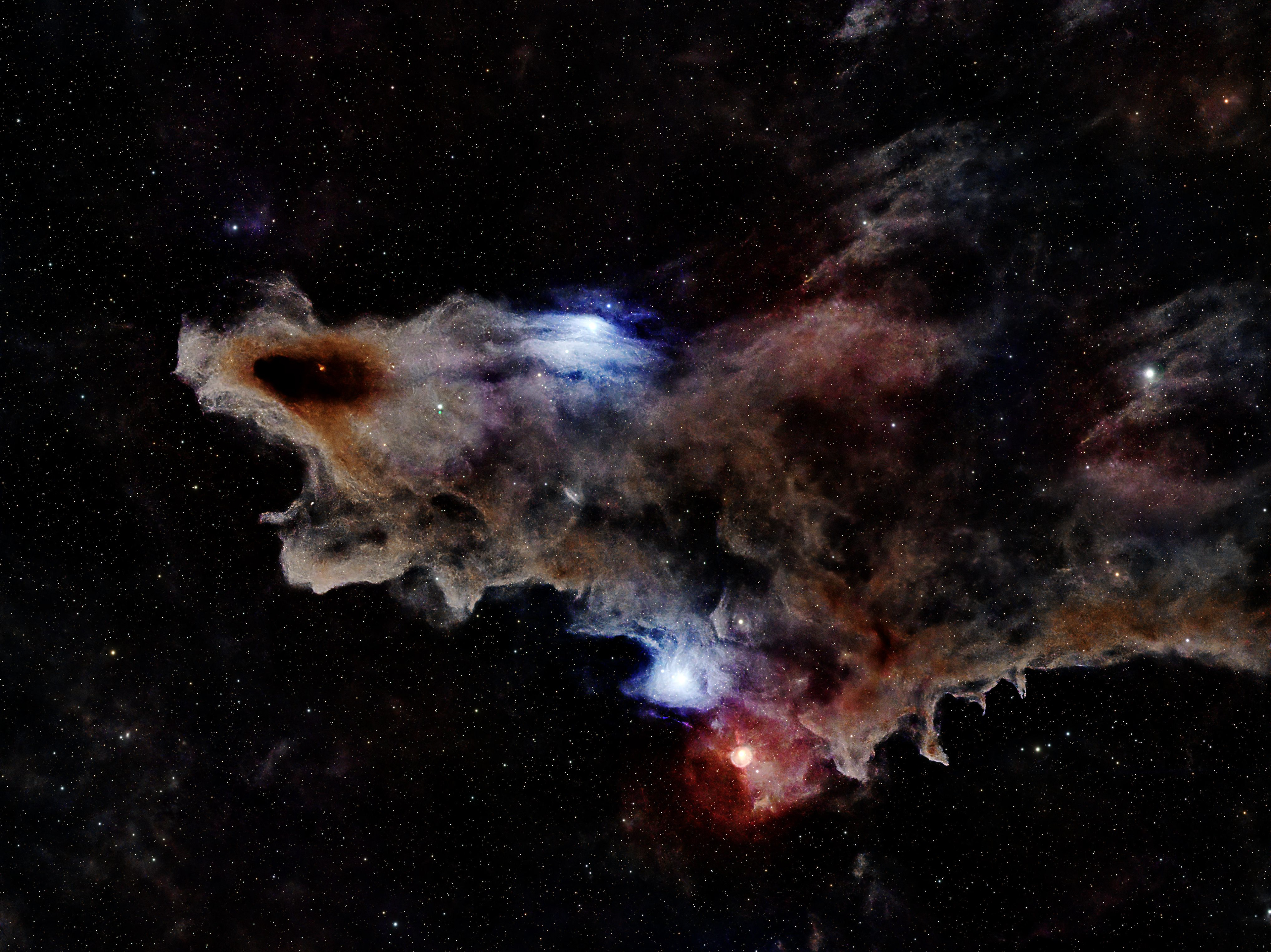
Shark Nebula vdB 150
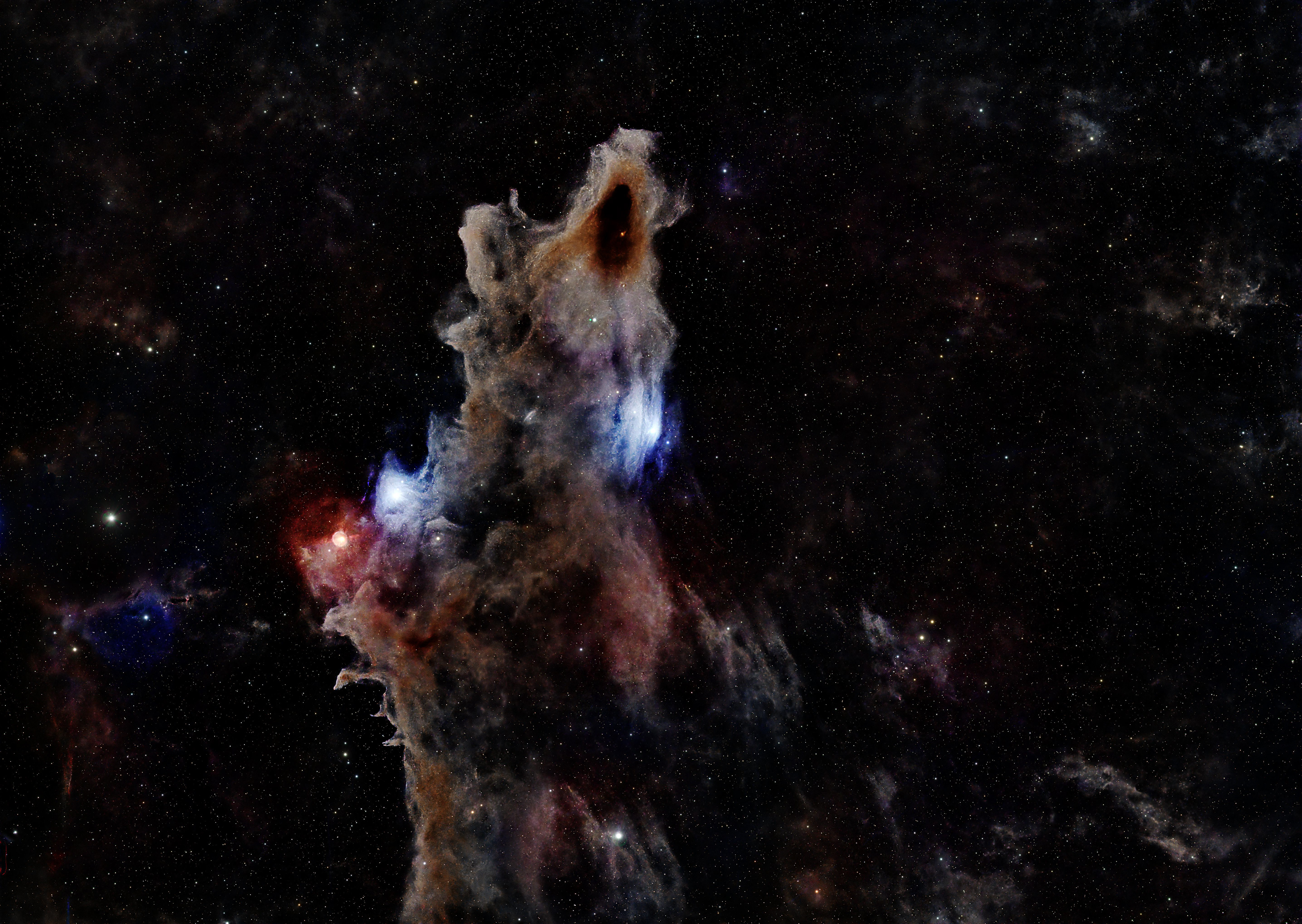
Shark Nebula vdB 150 rotated to look like a wolf!
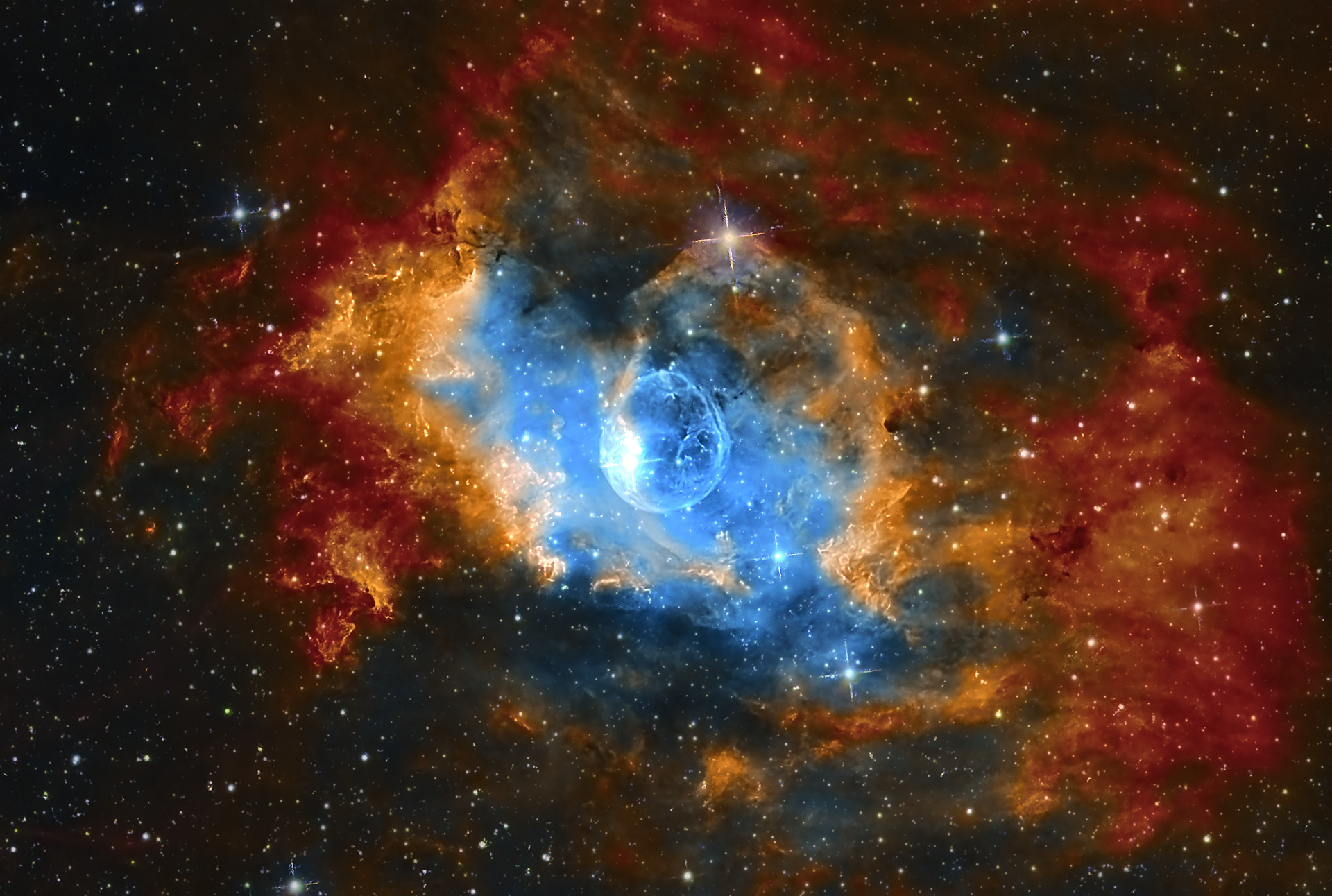
Bubble Nebula NGC 7635
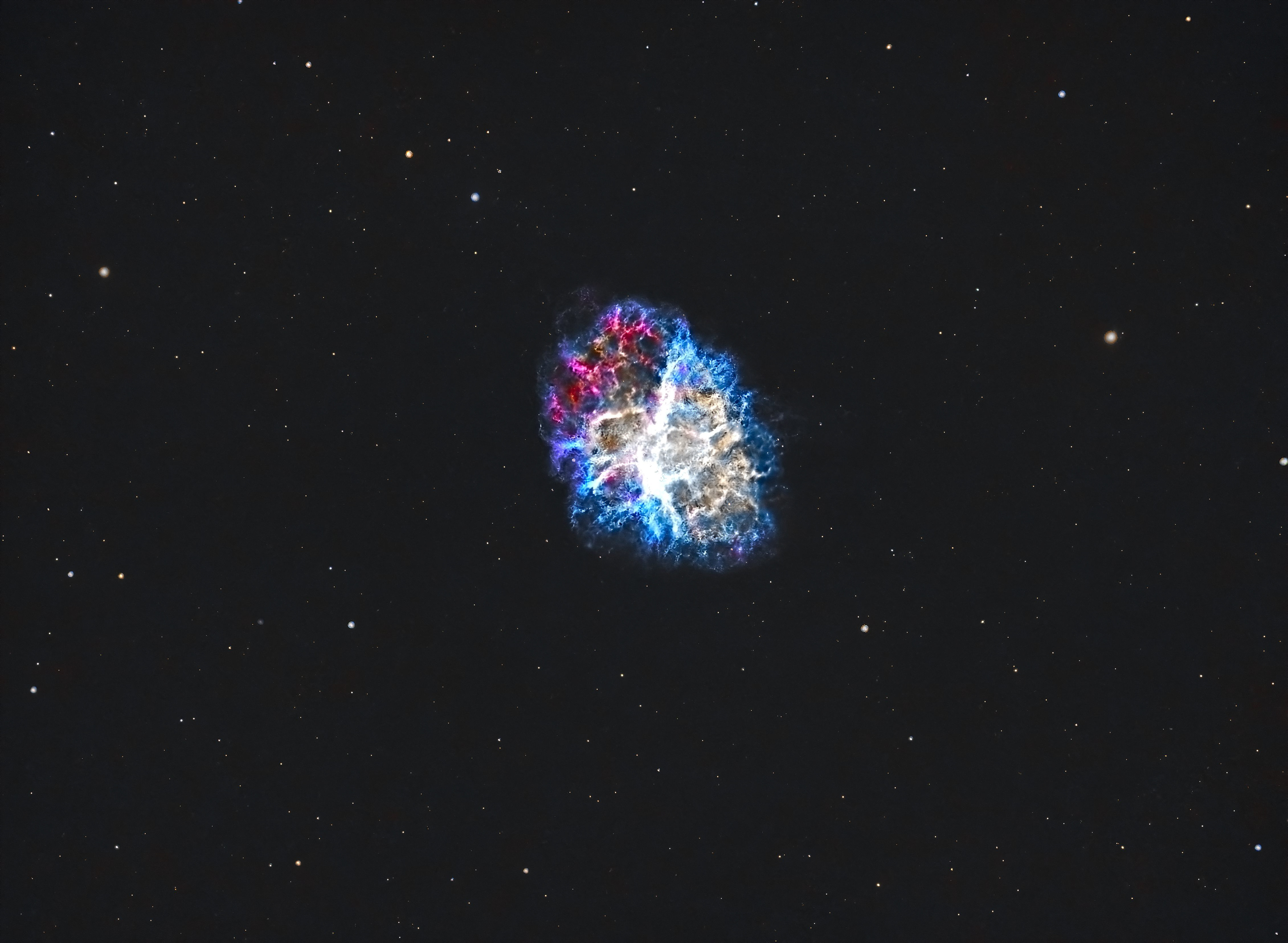
Crab Nebula M1
Spider Nebula IC417
Gamma Cygni Nebula IC 1318
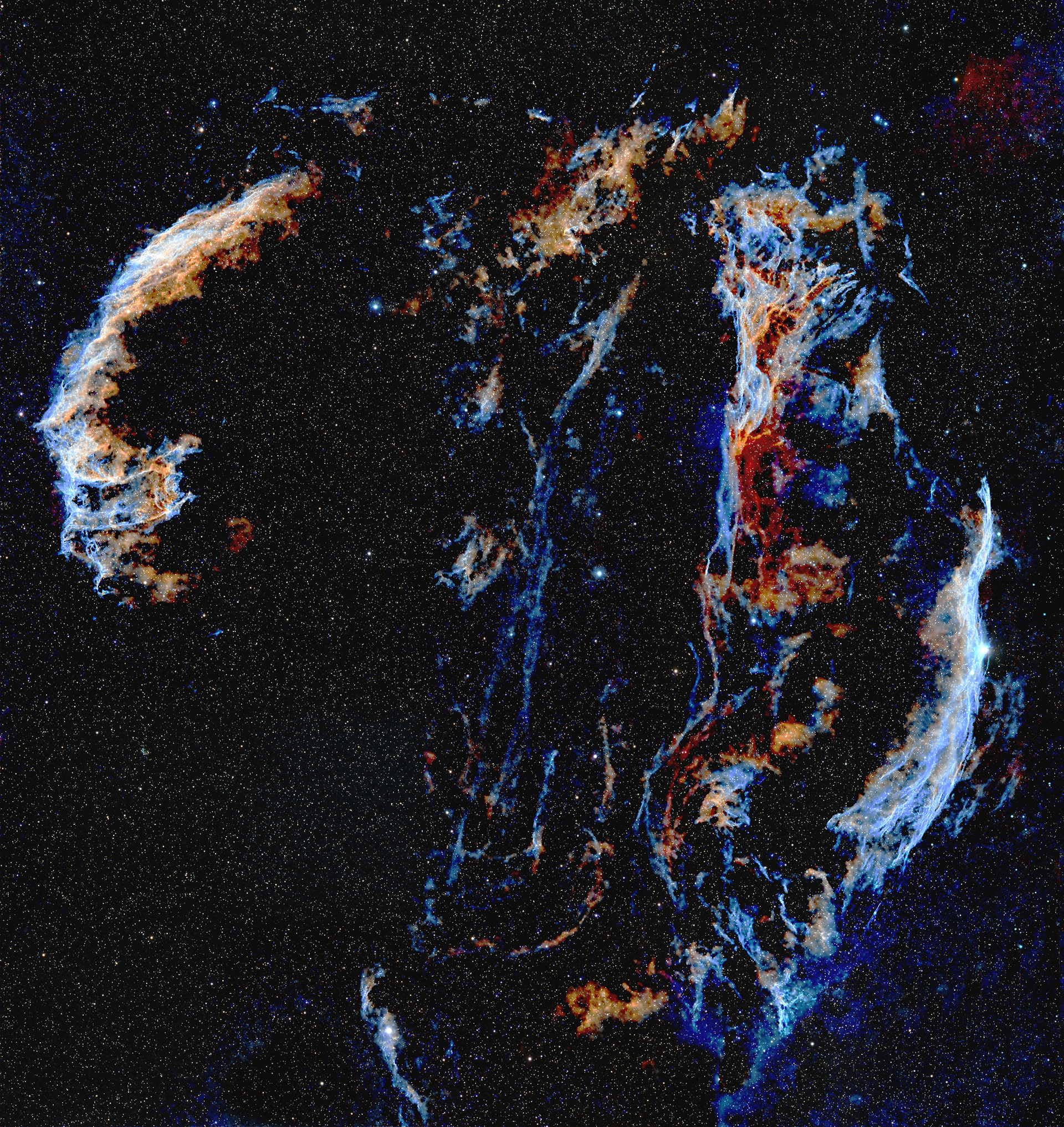
Veil Nebula NGC 6960 / 6992
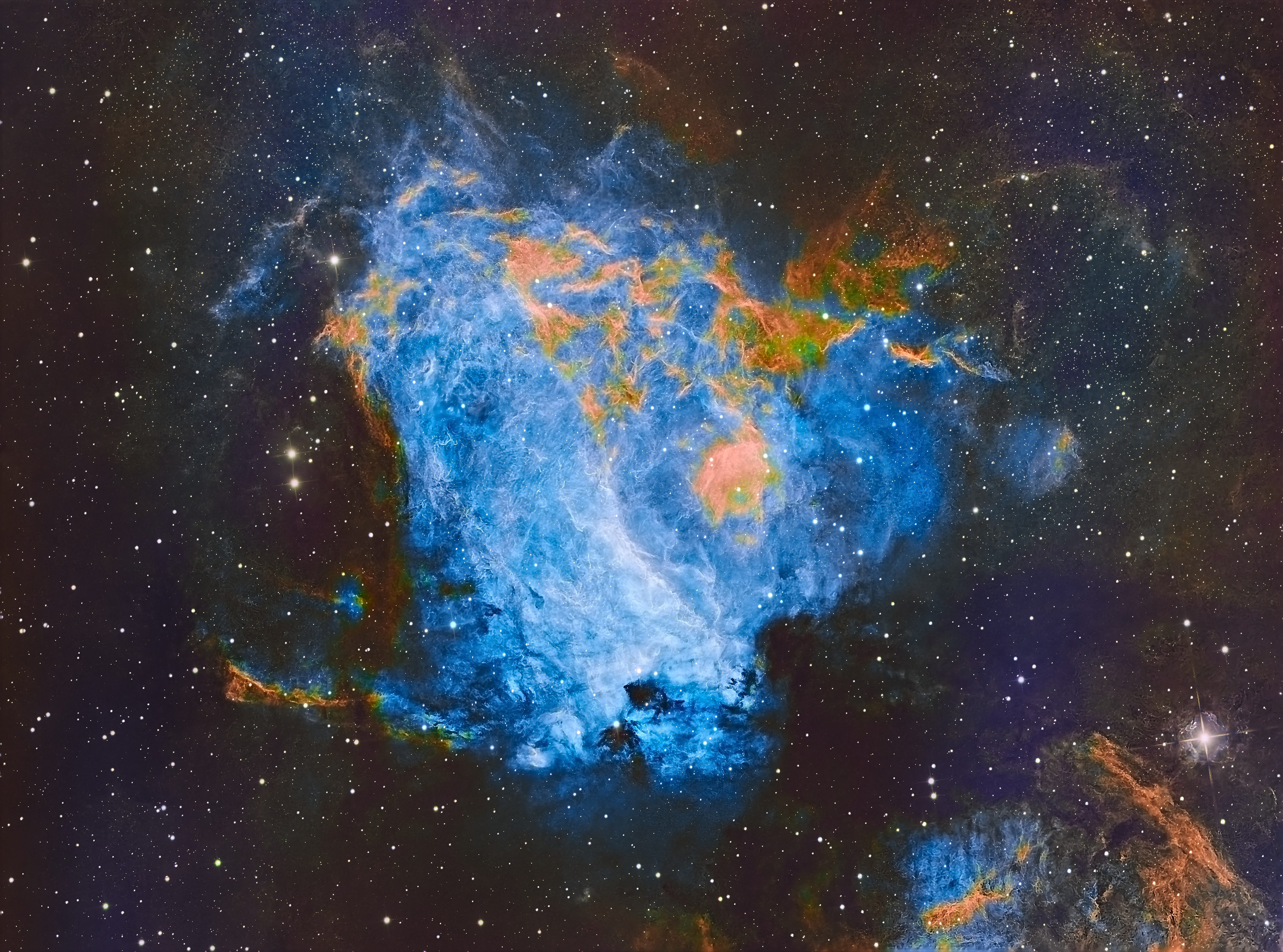
Omega Nebula M 17
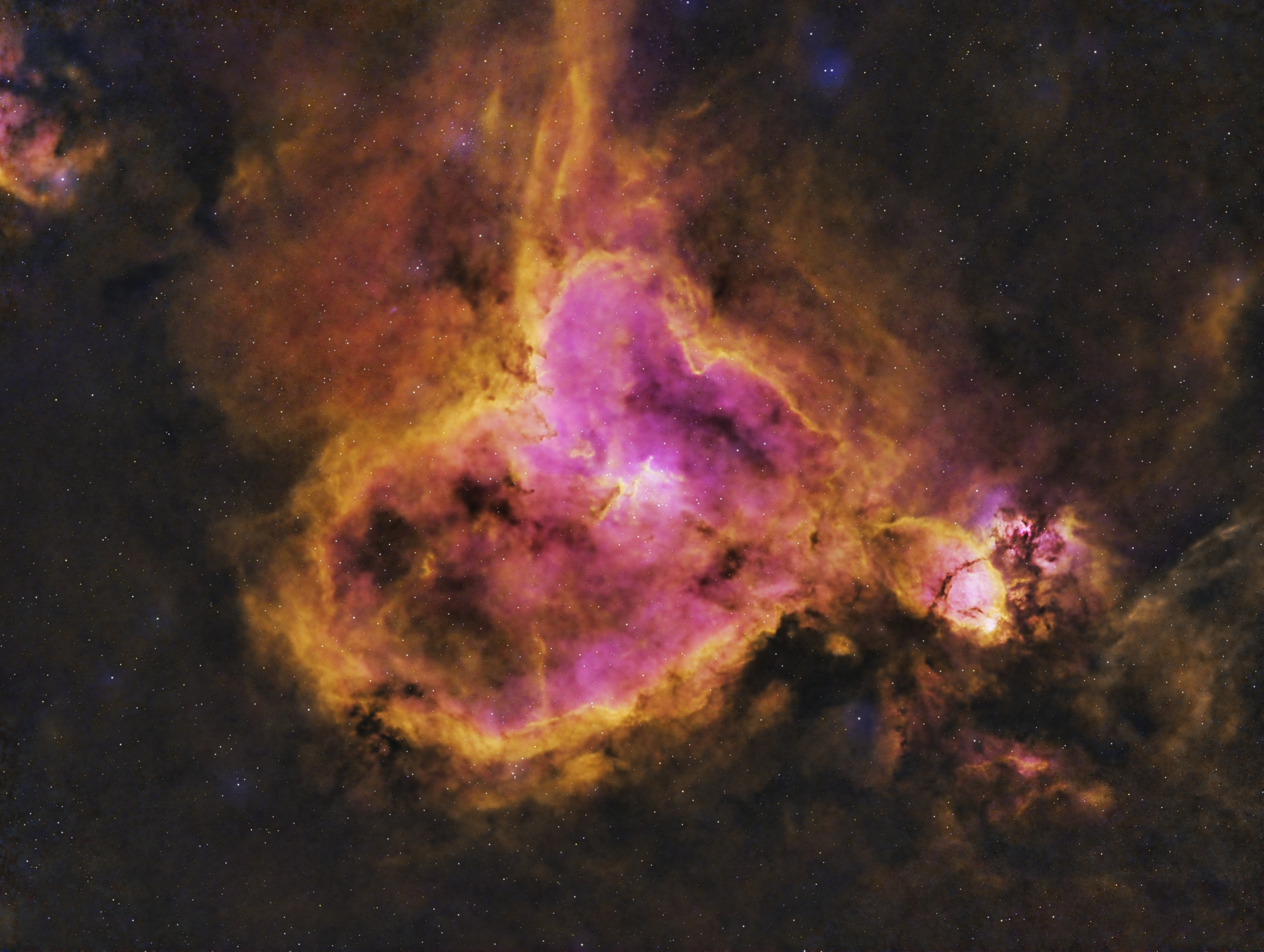
The Heart Nebula IC 1805
Cocoon Nebula IC 5146
Prawn or Shrimp Nebula SH2-188
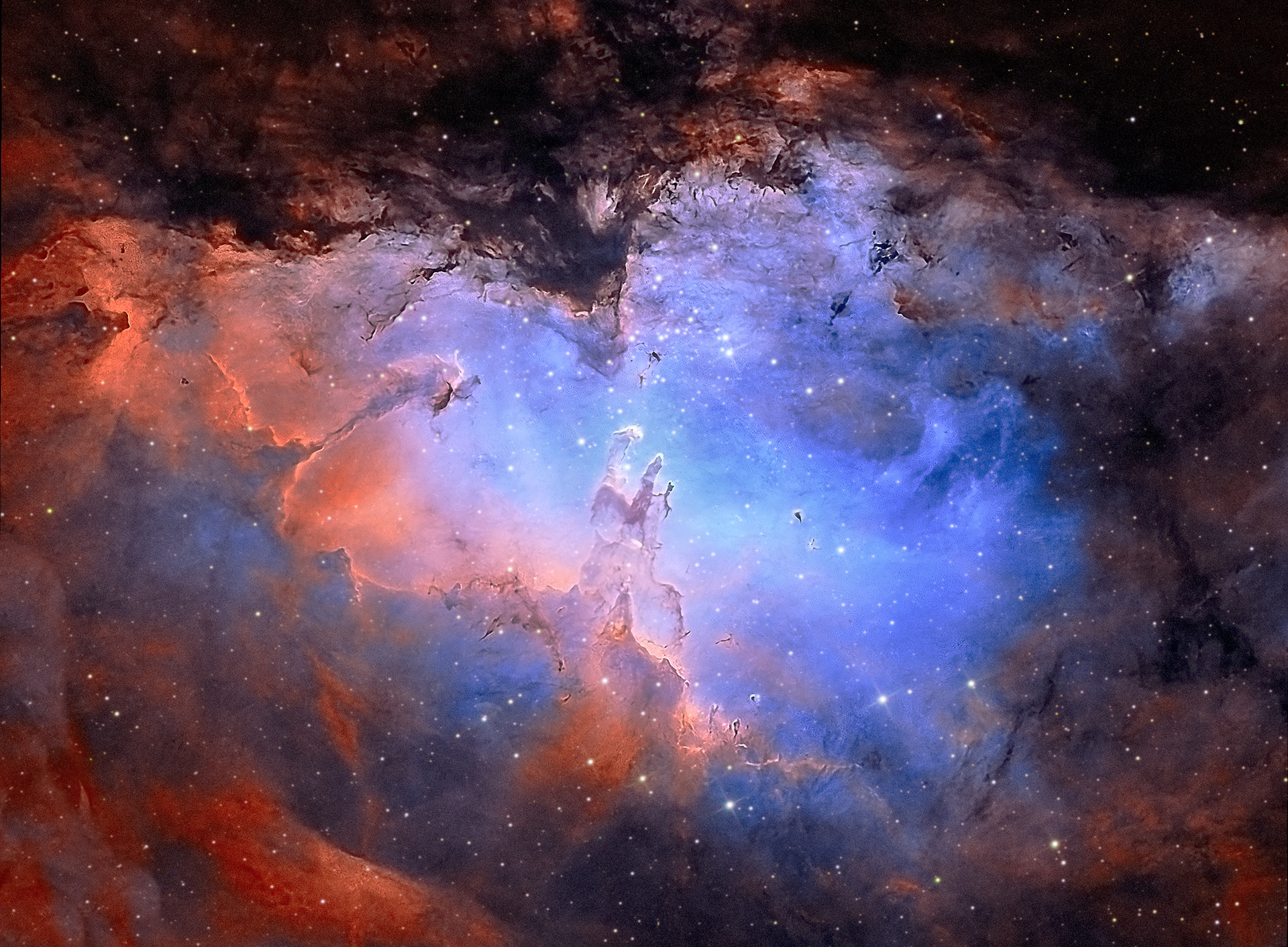
Eagle Nebula M 16
Lion Nebula SH2-132
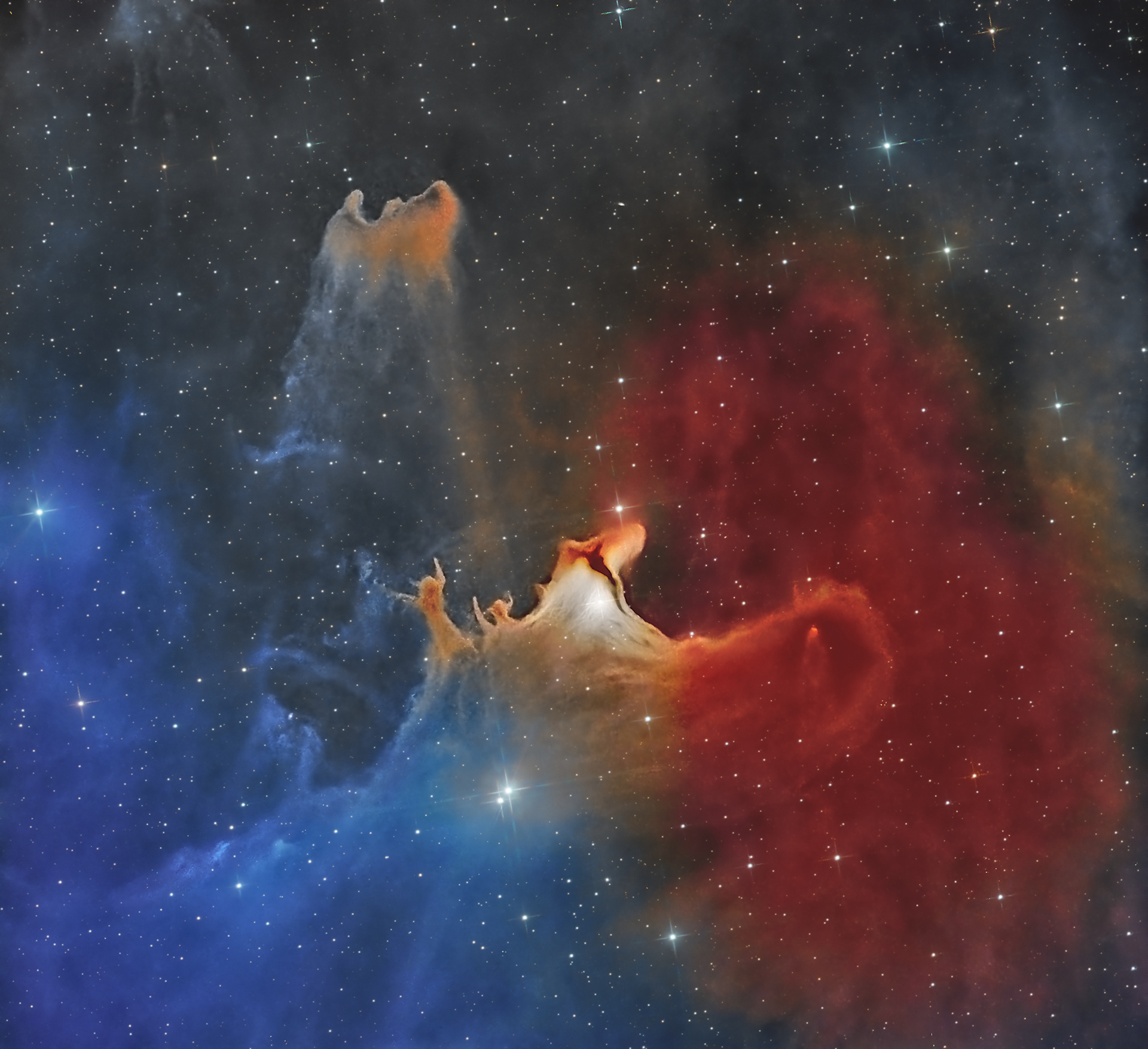
Ghost Nebula SH2-136
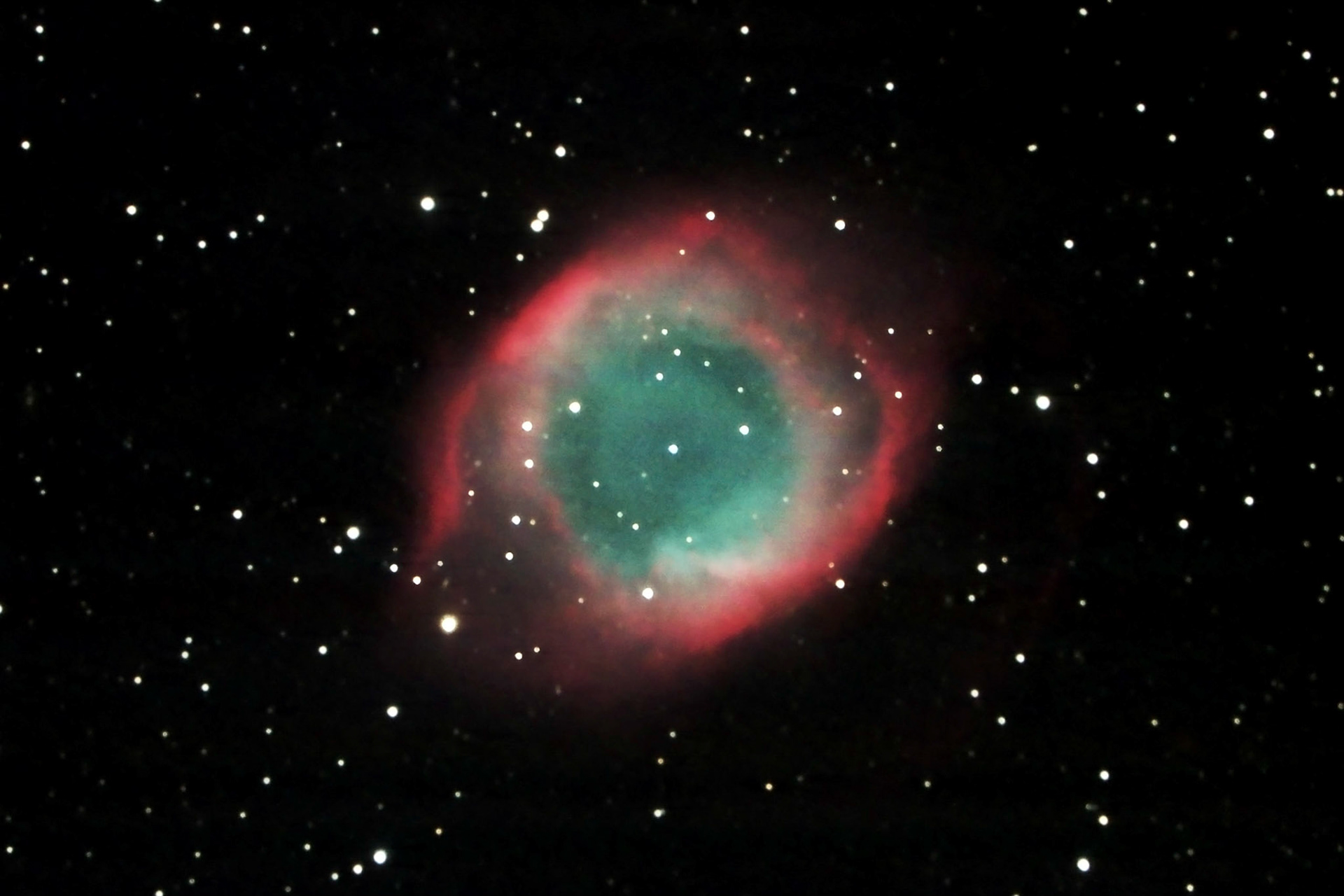
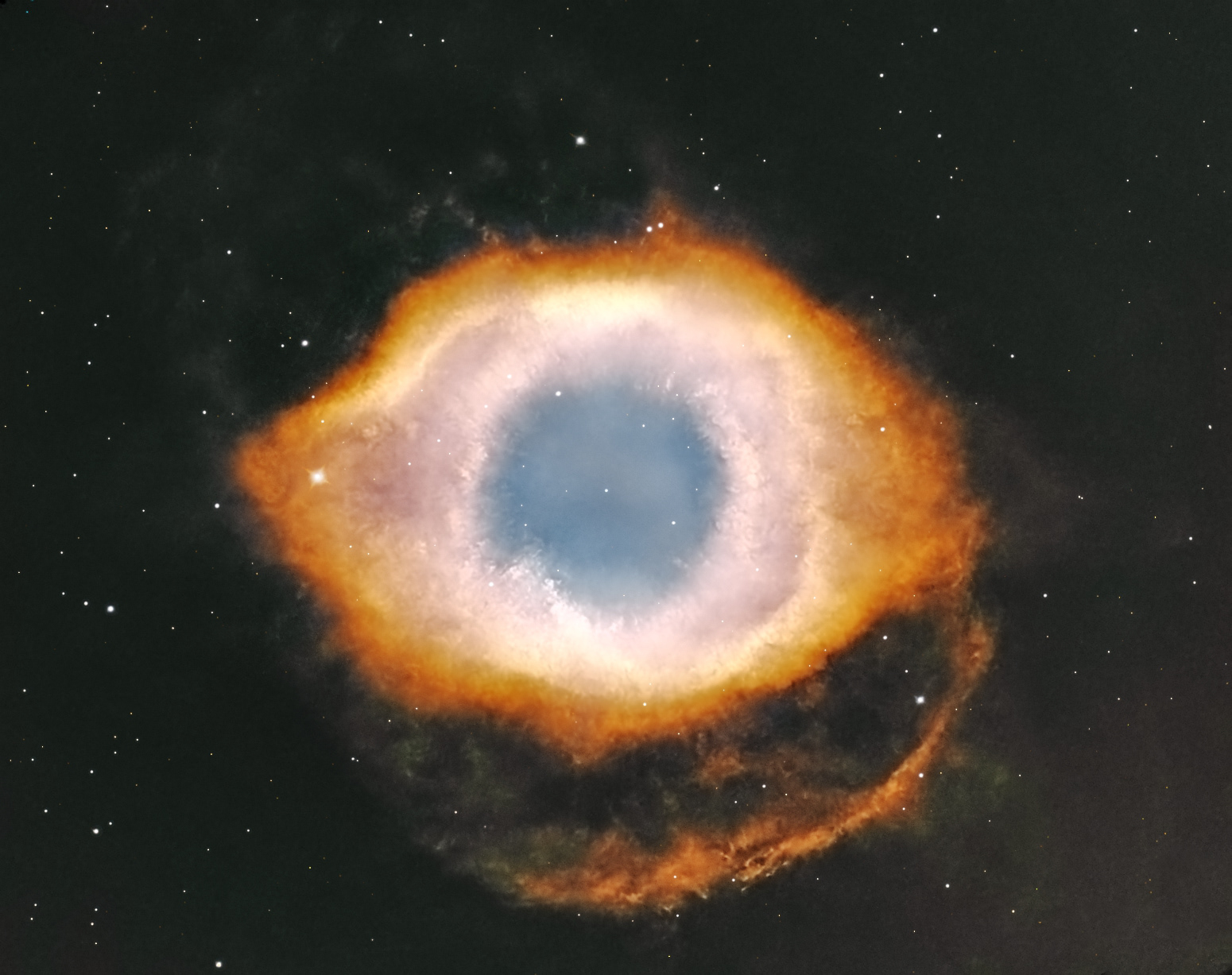
Helix Nebula NGC 7293
The Helix Nebula (NGC 7293) in NB is a planetary nebula located 650 light years from Earth in the constellation Aquarius. It is one of the closest planetary nebulae to Earth, as well as one of the brightest. Its striking appearance has earned it the nickname the Eye of God Nebula. Planetary nebulae like the Helix are formed when stars that are not massive enough to go out as supernovae expel their outer envelopes at the end of their evolutionary cycles. The stars become white dwarfs – hot remnant stellar cores – that energize the ejected material. White dwarfs are very dense, typically packing a mass similar to that of the Sun into a volume comparable to that of the Earth. The intense ultraviolet radiation from these stars causes the ejected layers of gas to glow. The Helix Nebula is believed to have formed about 10,600 years ago, when the central star, catalogued as GJ 9785, reached the end of its life cycle and shed its outer layers into space. HOO
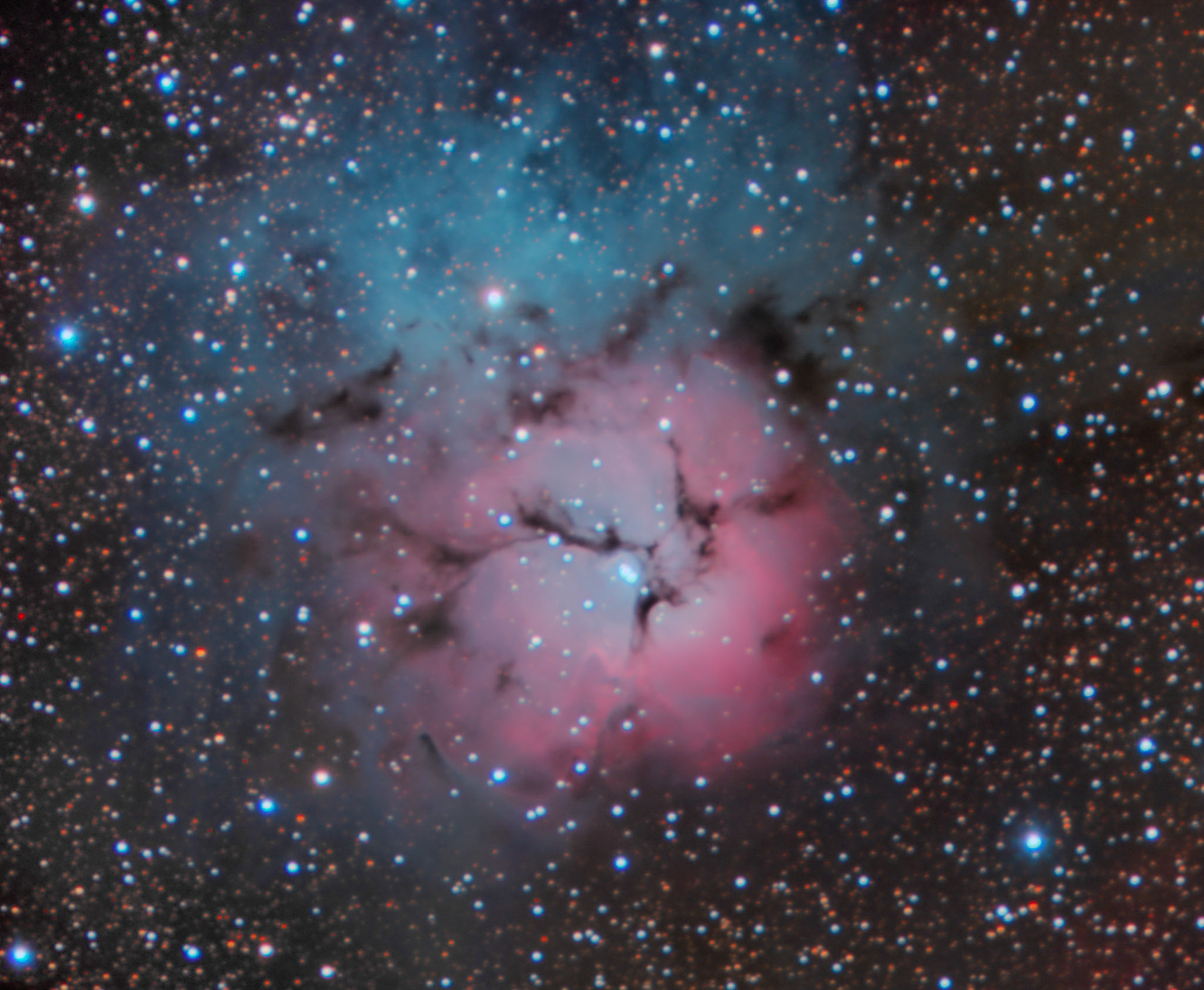
M20, the Trifid Nebula. The Trifid Nebula is a rare combination of three nebulae types that reveal the fury of freshly formed stars and point to more star birth in the future. 8" SCT; ZWO 1600MM Pro — at Los Angeles Astronomical Society.
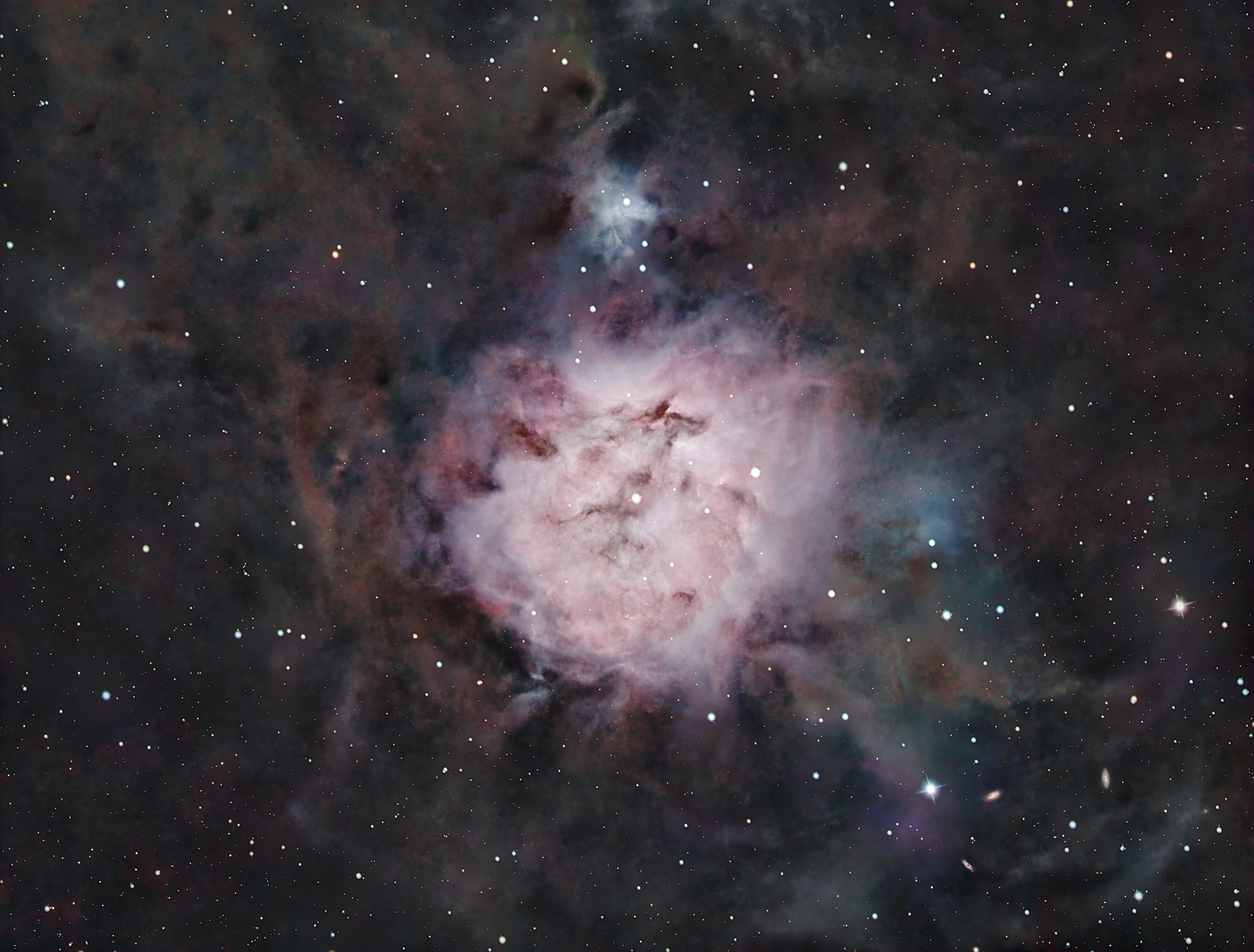
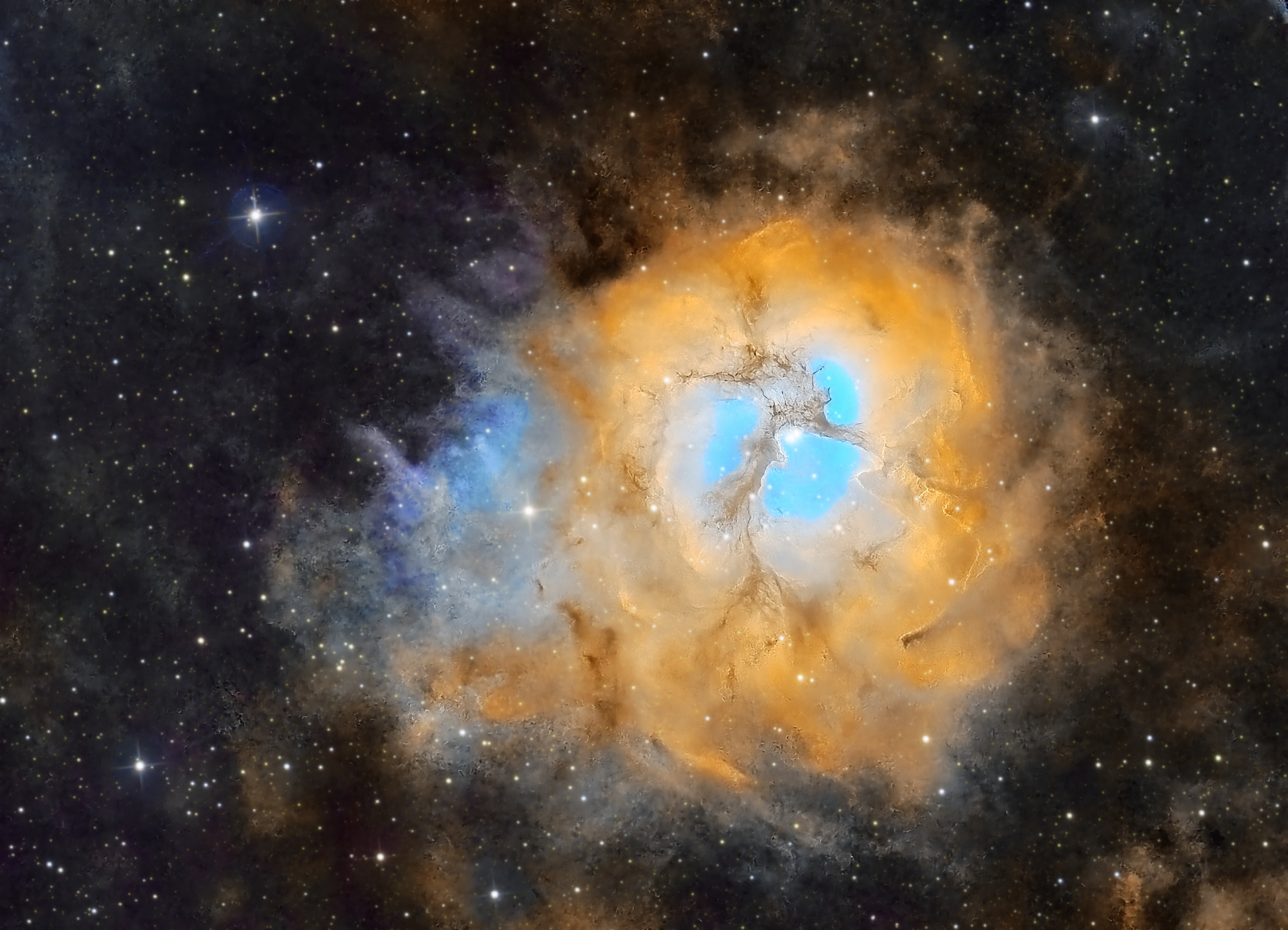
The Trifid Nebula (M20) in NB is a large star-forming region located in the constellation Sagittarius. The nebula’s name means “divided into three lobes,” and refers to the object consisting of three types of nebulae and an open star cluster. The open cluster is surrounded by an emission nebula, a reflection nebula, and a dark nebula within the emission nebula that gives M20 the trifurcated appearance for which it is known. It has a diameter of 42 light years and lies at a distance of 5,200 light years from Earth. SHO
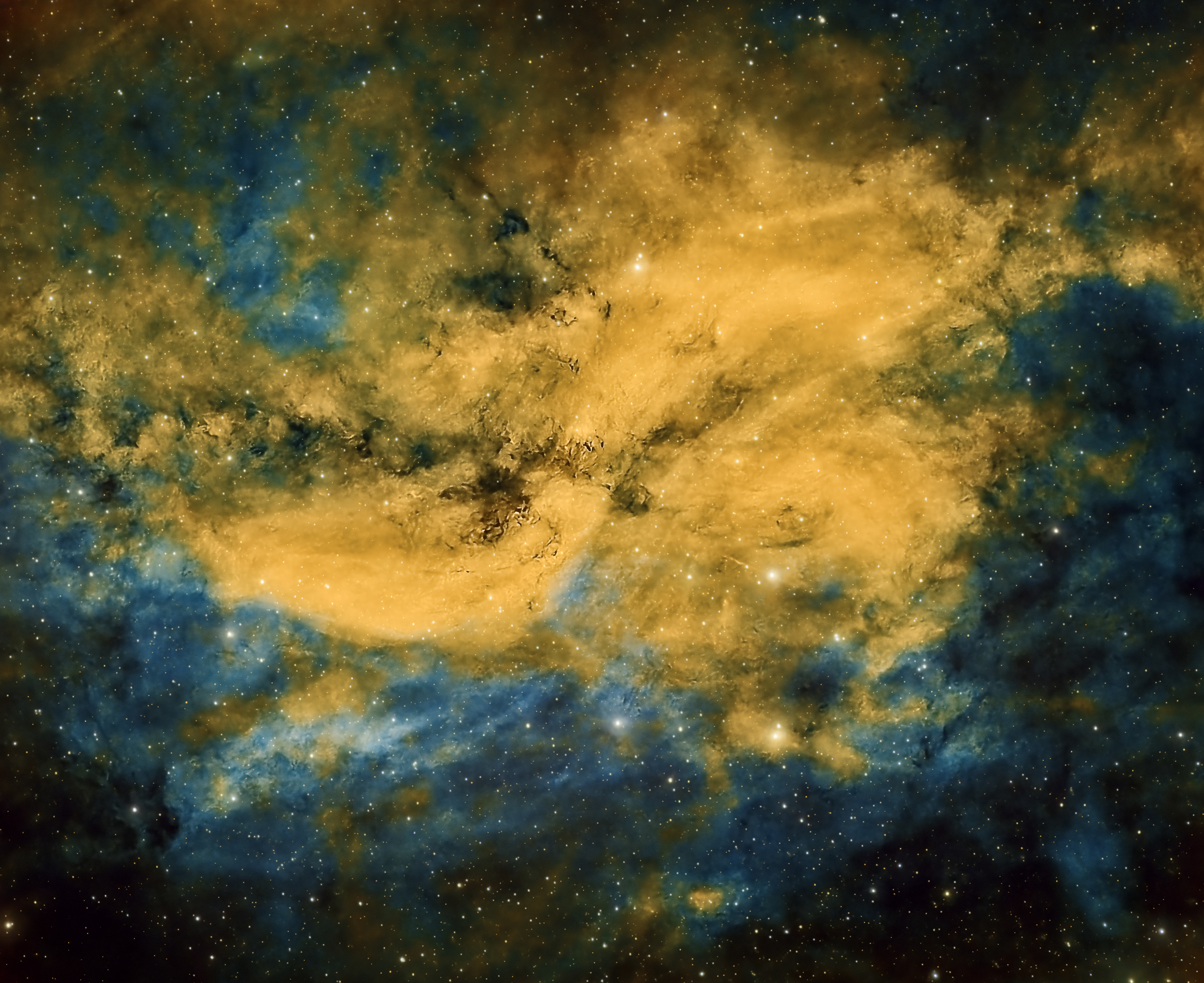
Simeis 57, the Propeller Galaxy, is part of a vast and rich HII-region in Cygnus, known as Cygnus X Complex. It was catalogued first in the early 1950s by astronomers at the Crimean Astrophysical Observatory at Simeiz, Ukraine, as the 57th object in a catalogue containing 306 HII regions.
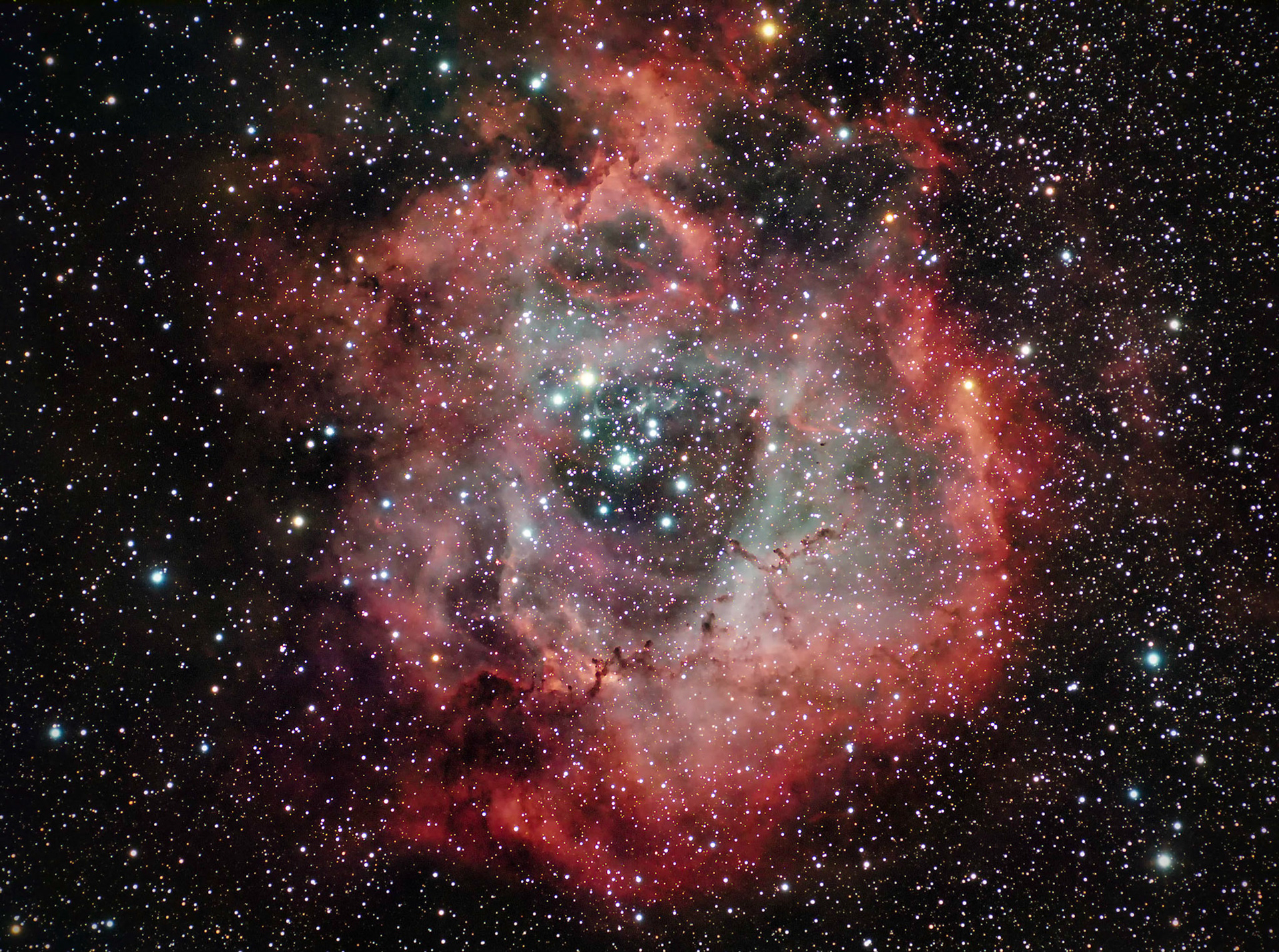
The Rosette Nebula is an H II region located in the Monoceros region of the Milky Way Galaxy. The open cluster NGC 2244 is closely associated with the nebulosity, the stars of the cluster having been formed from the nebula's matter. The radiation from the young stars excites the atoms in the nebula, causing them to emit radiation themselves producing the emission nebula we see in this LRGB image. A survey of the nebula with the Chandra X-ray Observatory has revealed the presence of numerous new-born stars inside optical Rosette Nebula and studded within a dense molecular cloud. Altogether, approximately 2500 young stars lie in this star-forming complex. Distance: 5000 light years Radius: 65 light years
The Tulip Nebula (Sh2-101) is an emission nebula located in Cygnus constellation. It lies at an approximate distance of 6,000 light years from Earth and has an apparent magnitude of 9.0, and a diameter of about 70 light years. The HII region is called the Tulip Nebula because its shape resembles the form of a tulip. The emission from the Tulip Nebula is powered by ultraviolet radiation of a hot young star. In images, it can be seen near the nebula’s center. HOO
IC405 Flaming Star Nebula - an emission and reflection nebula surrounding the bluish, irregular variable star AE Aurigae. It shines at magnitude +6.0. The nebula measures approximately 37.0' x 19.0', and lies about 1,500 light-years away from Earth. The nebula is about 5 light-years across. It is located about 10,000 light years from Earth. It is a hotbed of new star formation. This is a combination of Sulfur, Ha and OIII (SHO aka Hubble Palette) to create a color image.
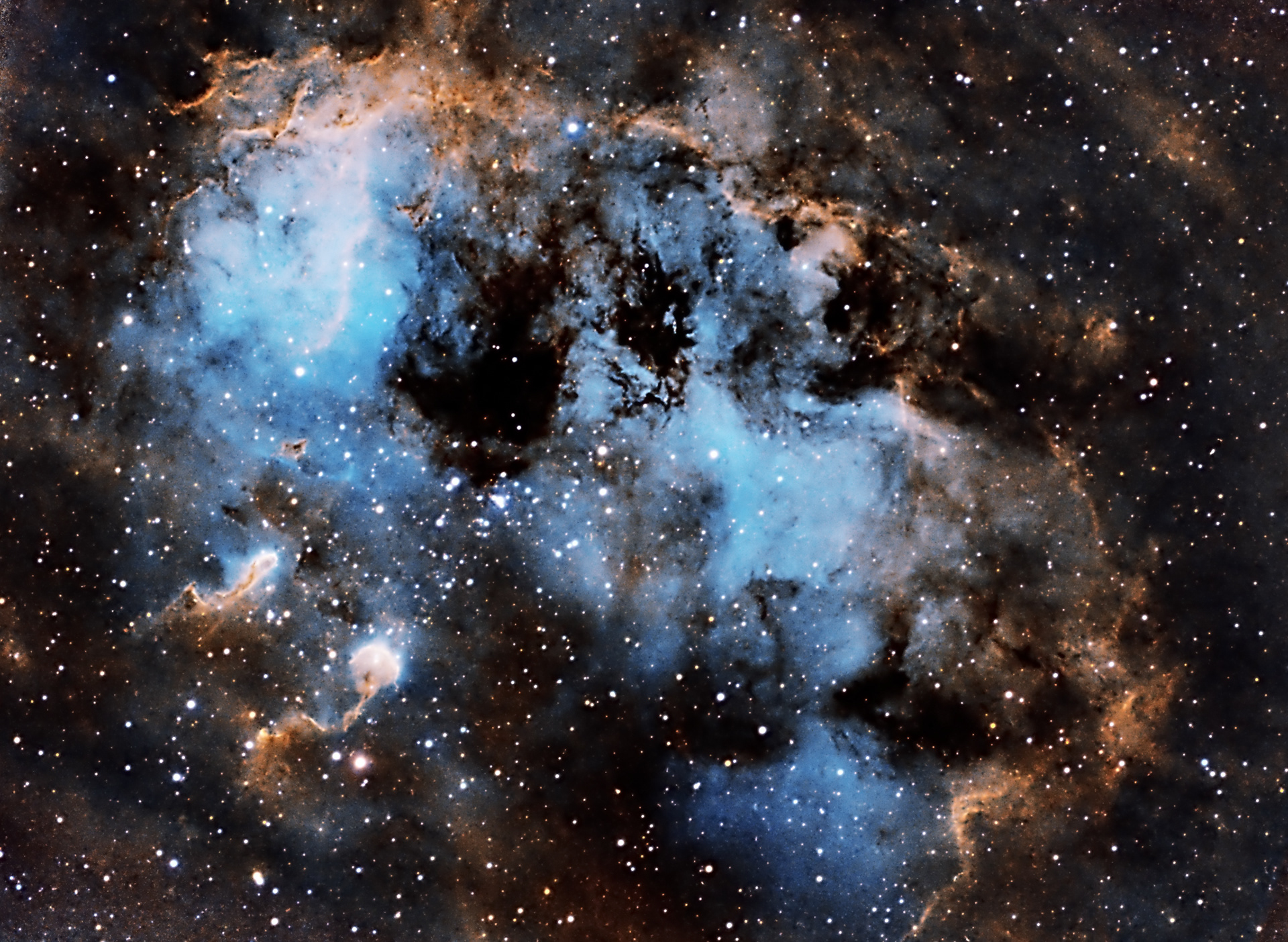
IC410 is a dusty emission nebula located in the constellation of Auriga at about 12.000 ly from Earth. The gas structures in this picture are lit by the radiation from the open star cluster NGC1893 that lies in the center of the nebula. This star cluster is about 4 million years old, but in astronomical terms it is still very young, with hot, massive stars. At the bottom-right of the star cluster two more dense structures are visible. These are similar to the famous Pillar of Creation and they are composed of dust and gas leftover from the formation of the star cluster and are very likely to give birth to more stars in the future. The tadpoles are formed from the stellar winds and radiation pressure from the stars in NGC 1893.
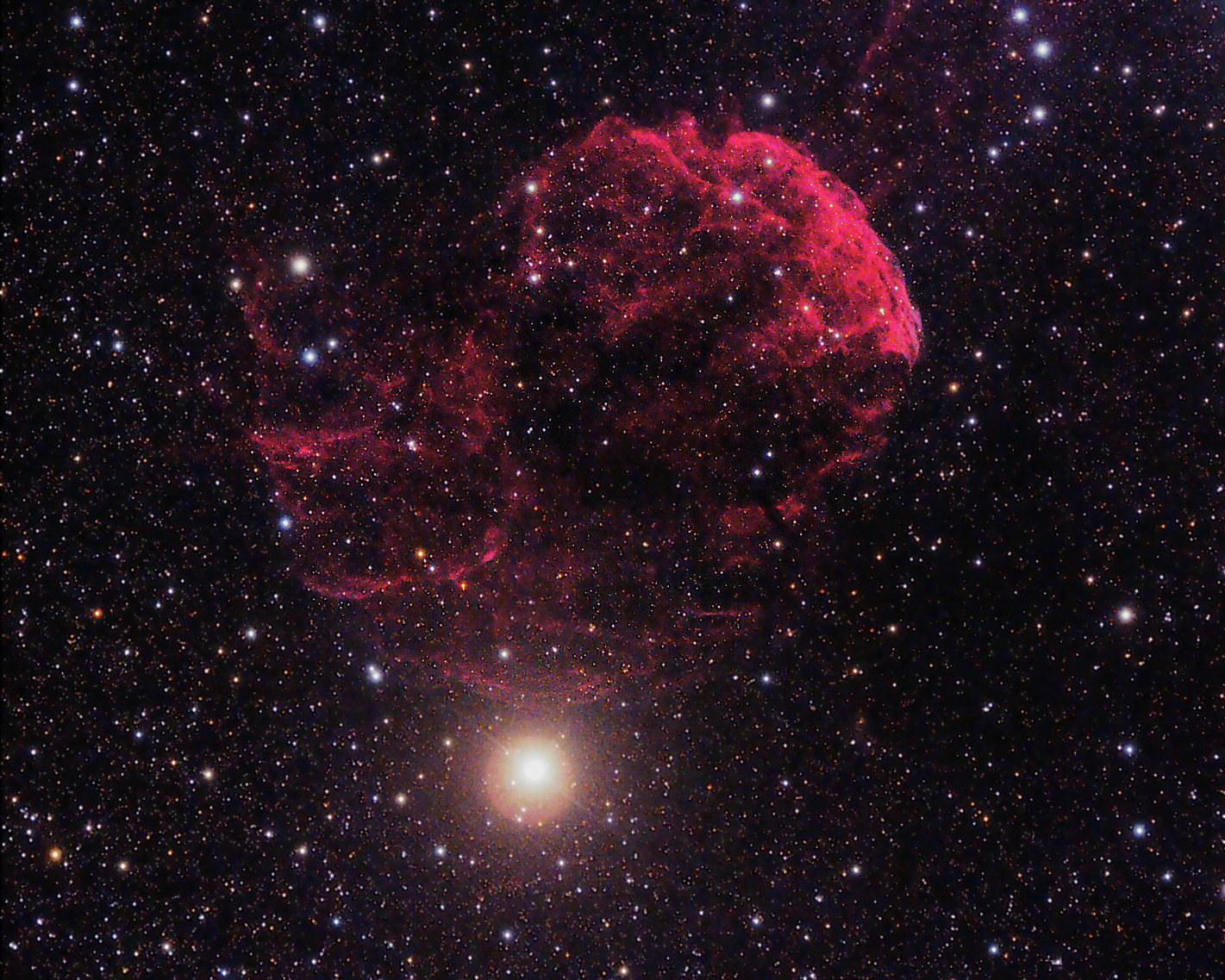
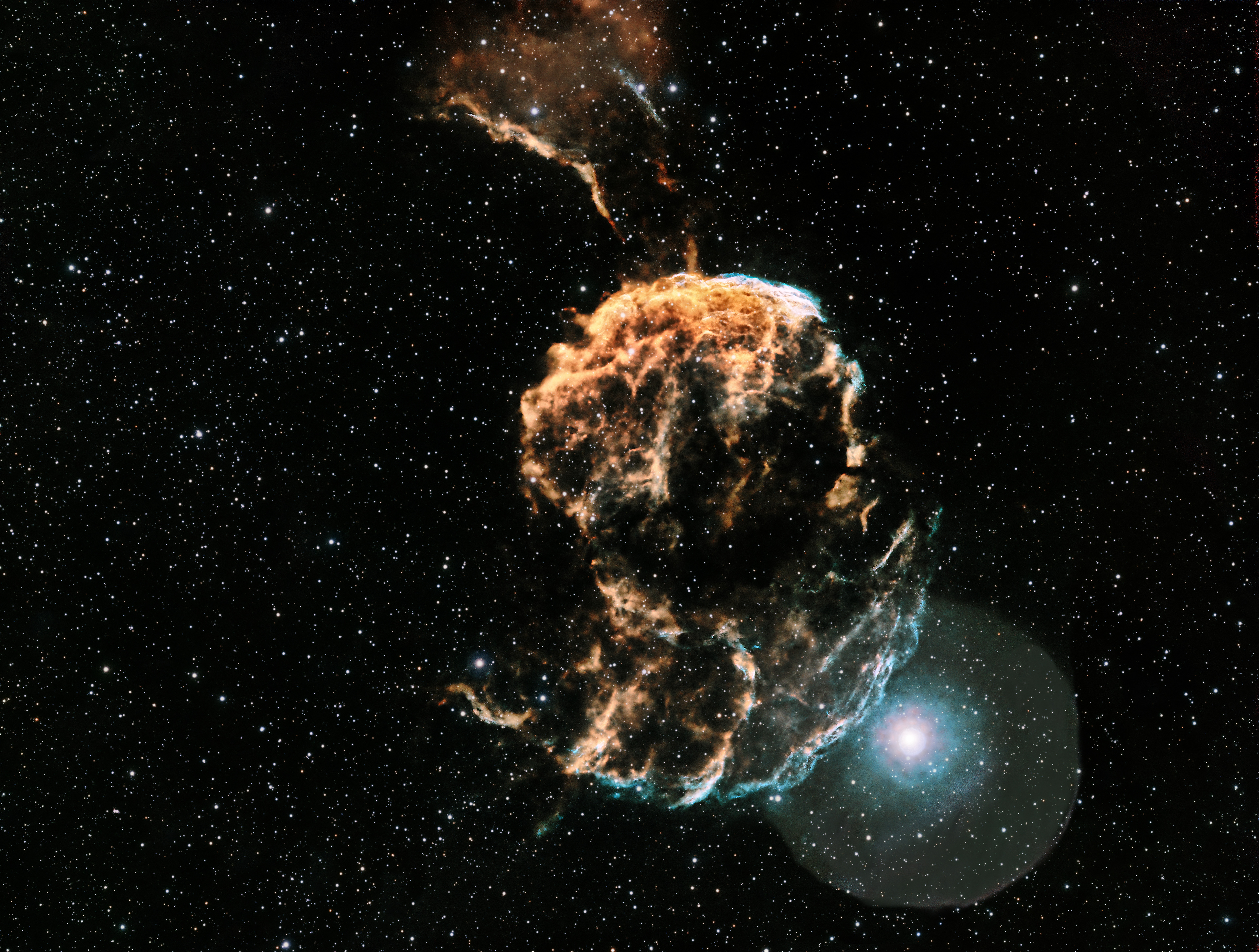
IC 443 Jellyfish Nebula - a galactic supernova remnant in the constellation Gemini. near the star Eta Geminorum. Its distance is roughly 5,000 light years from Earth. IC 443 may be the remains of a supernova that occurred 3,000 - 30,000 years ago. It is located about 10,000 light years from Earth. It is a hotbed of new star formation. This is a true color combination using L-R-G-B filters.
IC 443 Jellyfish Nebula in NB - a galactic supernova remnant in the constellation Gemini. near the star Eta Geminorum. Its distance is roughly 5,000 light years from Earth. IC 443 may be the remains of a supernova that occurred 3,000 - 30,000 years ago. It is located about 10,000 light years from Earth. It is a hotbed of new star formation. This is a combination of both Ha and OIII to create a bi color image.
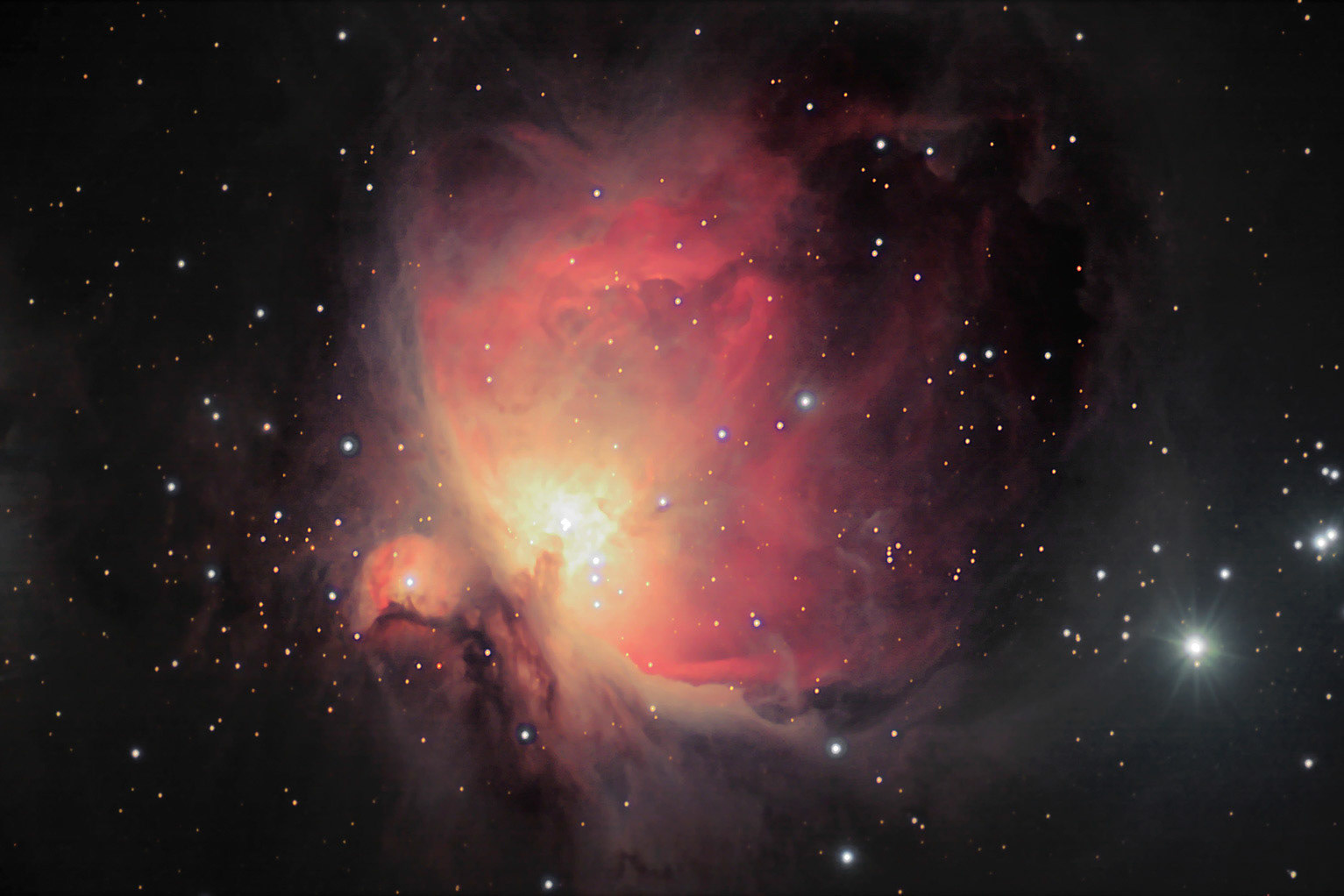
A photo of M42, the Orion Nebula, taken on a hazy, partially clouded night in Lockwood Valley. Tried out my recent Craigslist purchase of a 5" achromatic refractor for $200! Guess it works, since this was taken under poor conditions.
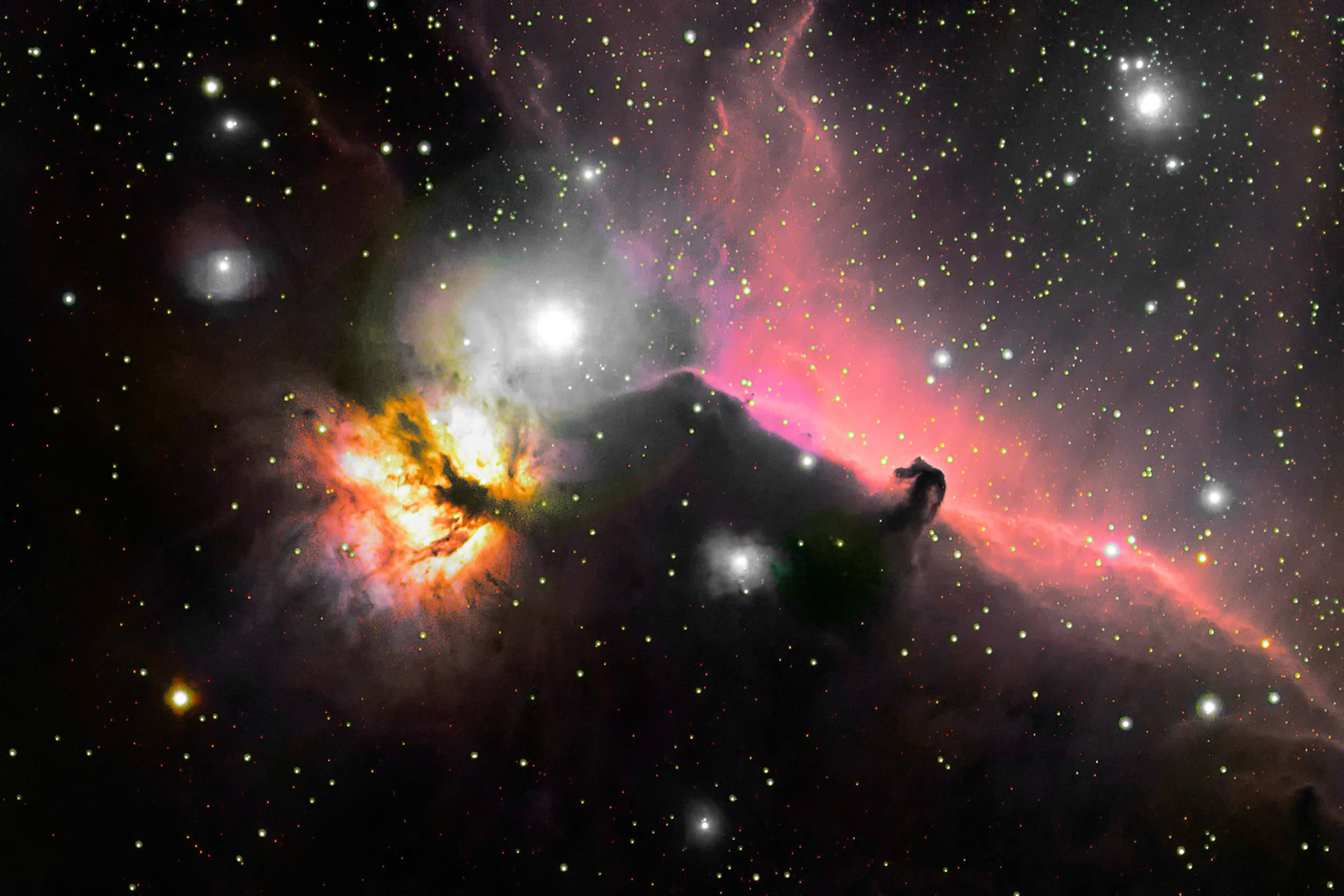
Flame and Horsehead Nebulae
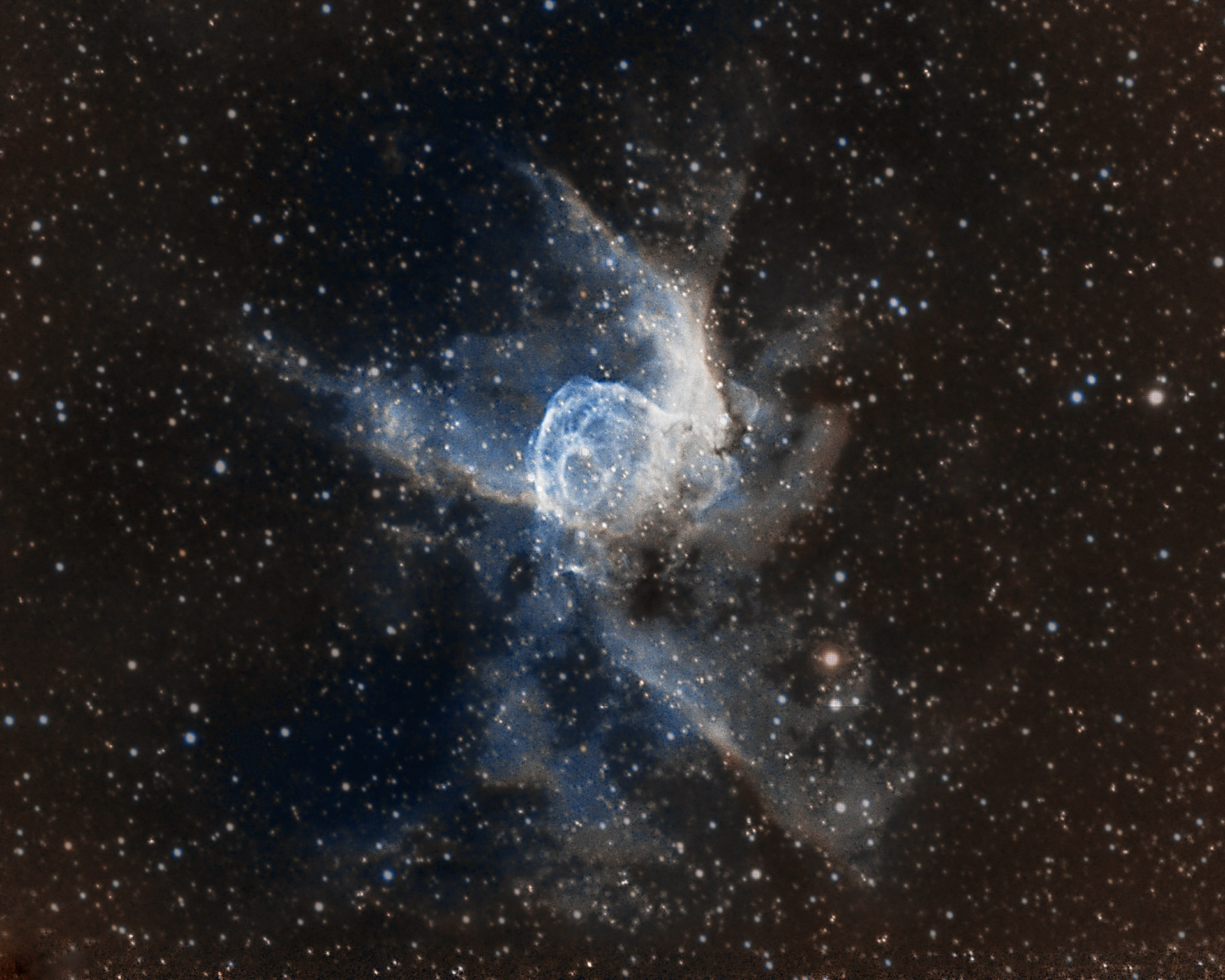
NGC 2359 Thor's Helmet - an emission nebula in the constellation Canis Major. The nebula is approximately 11.96 thousand light years away and 30 light-years in size. The central star is the Wolf-Rayet star WR7, an extremely hot star thought to be in a brief pre-supernova stage of evolution. It is similar in nature to the Bubble Nebula, but interactions with a nearby large molecular cloud are thought to have contributed to the more complex shape and curved bow-shock structure of Thor's Helmet. It is located about 10,000 light years from Earth. It is a hotbed of new star formation. This is a combination of both Ha and OIII to create a bi color image.
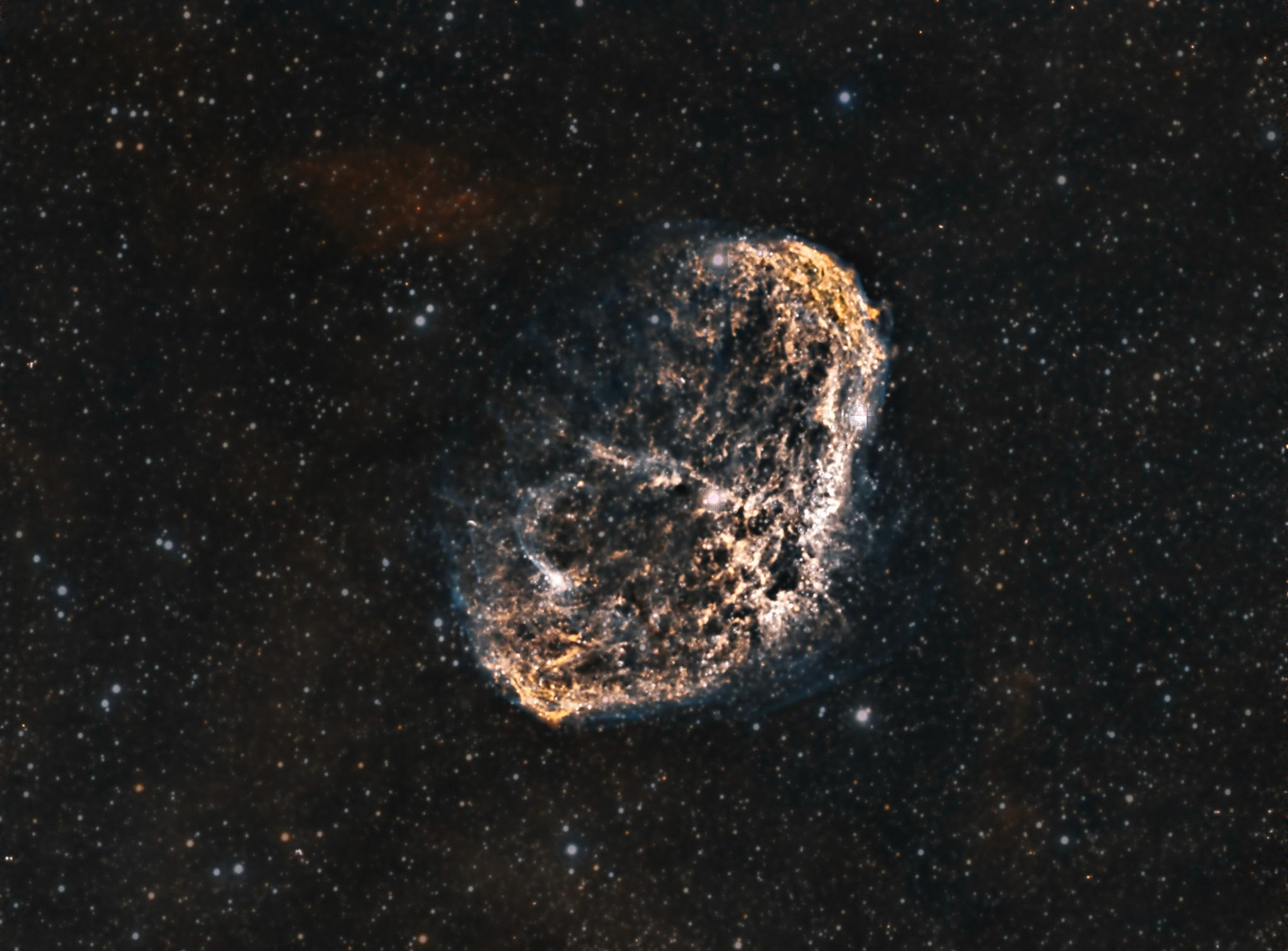
The Crescent Nebula is an emission nebula in the constellation Cygnus, about 5000 light-years away from Earth. The wavey "texture" is from the collision of stellar winds, like our solar winds, from two different stars, each exciting the other to glow. This image was made from only the light from Hydrogen and Oxygen, two different wavelengths.
Sh2-106 is an emission nebula and a star formation region in the constellation Cygnus. It is a H II region estimated to be around 2,000 ly from Earth, in an isolated area of the Milky Way. Weird, but pretty, huh?
SH2-155, aka the Cave Nebula. This collection of Hydrogen (H2), Oxygen (OIII) and Sulphur (SII) isotopes is a diffuse nebula located 2400 lightyears from earth. The images were collected from 9/21-12/21 using a Celestron 8" SCT telescope, a ZWO 1600mm Pro camera, and an Ioptron CEM70g mount. Integration times: H2, SII - 4 hours, OIII- 5 hours using the Hubble SHO palette.
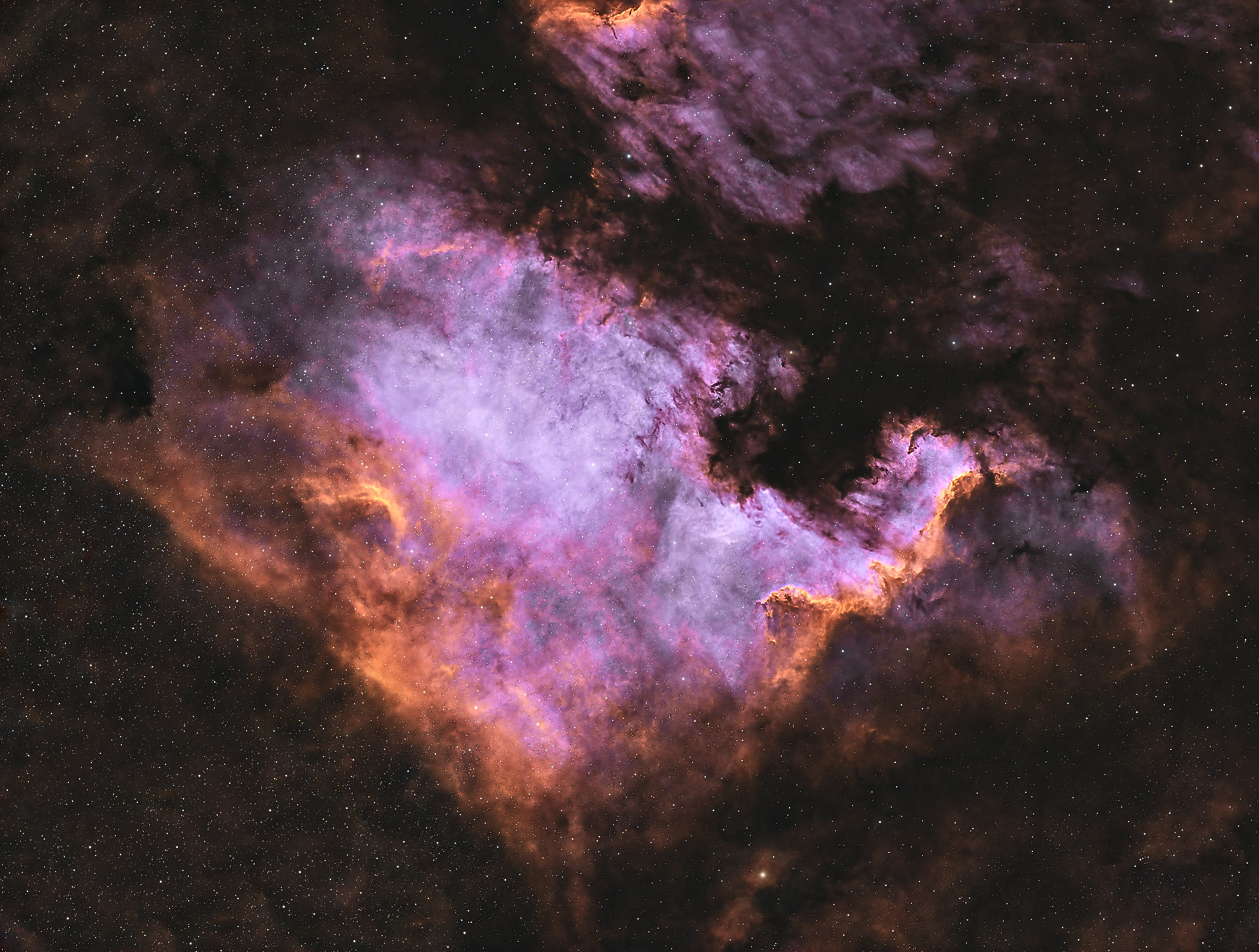
Ever wonder what you could see if you had very sensitive eyes? This shot was taken with a Canon 70mm lens, which is just a little more magnification than your eyes. So, a wide field shot. The only difference is this is a long exposure. At the center are a couple famous nebulae - the North America and The Pelican. — at Los Angeles Astronomical Society.
The North America Nebula (NGC 7000) in SHO is an emission nebula in the constellation Cygnus. It is named because its shape resembles North America. It glows because the Hydrogen, Oxygen and Sulphur gases are ionized by stars which causes them to glow. Distance: 2,590 light years Radius: 90x140 light years
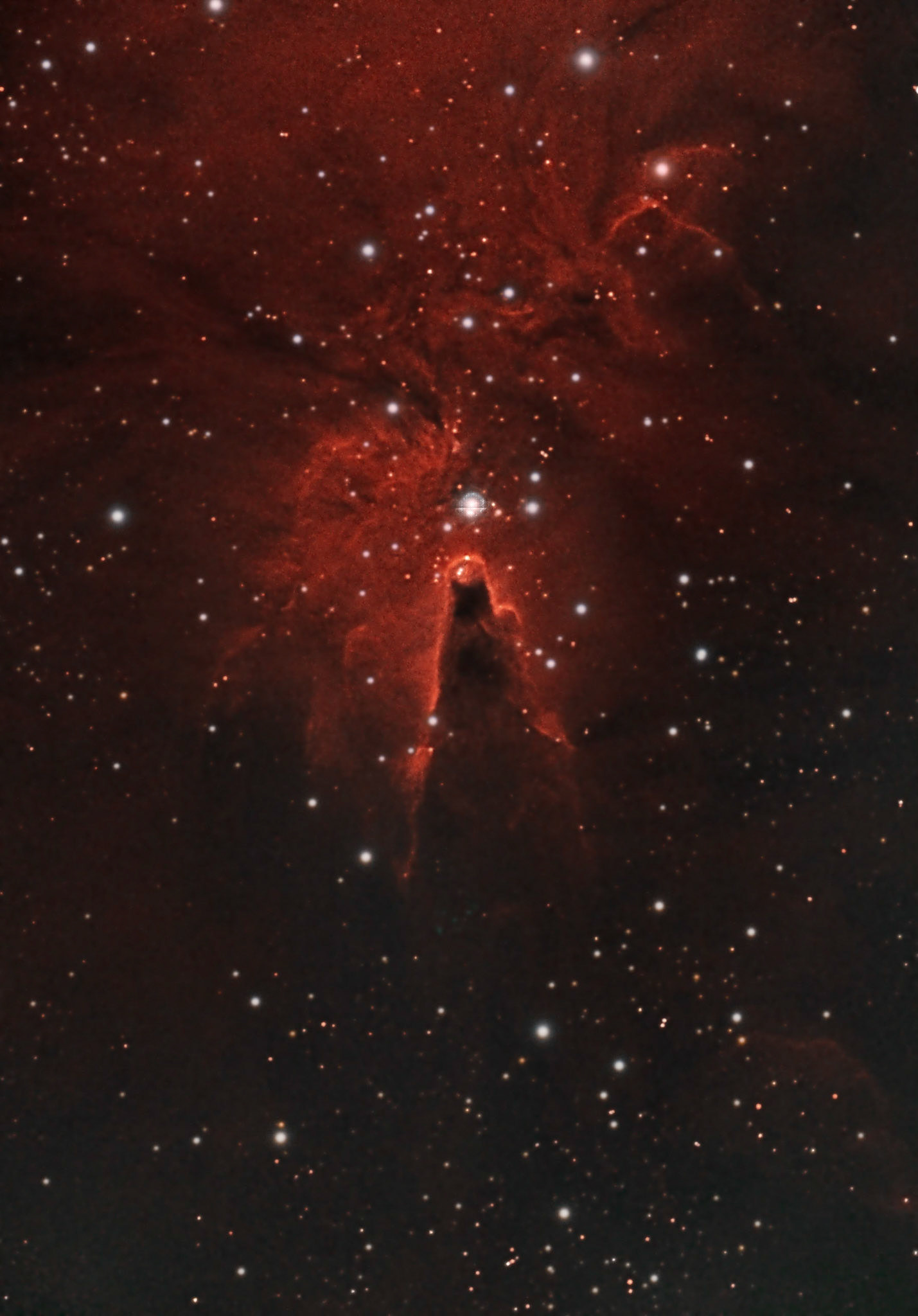
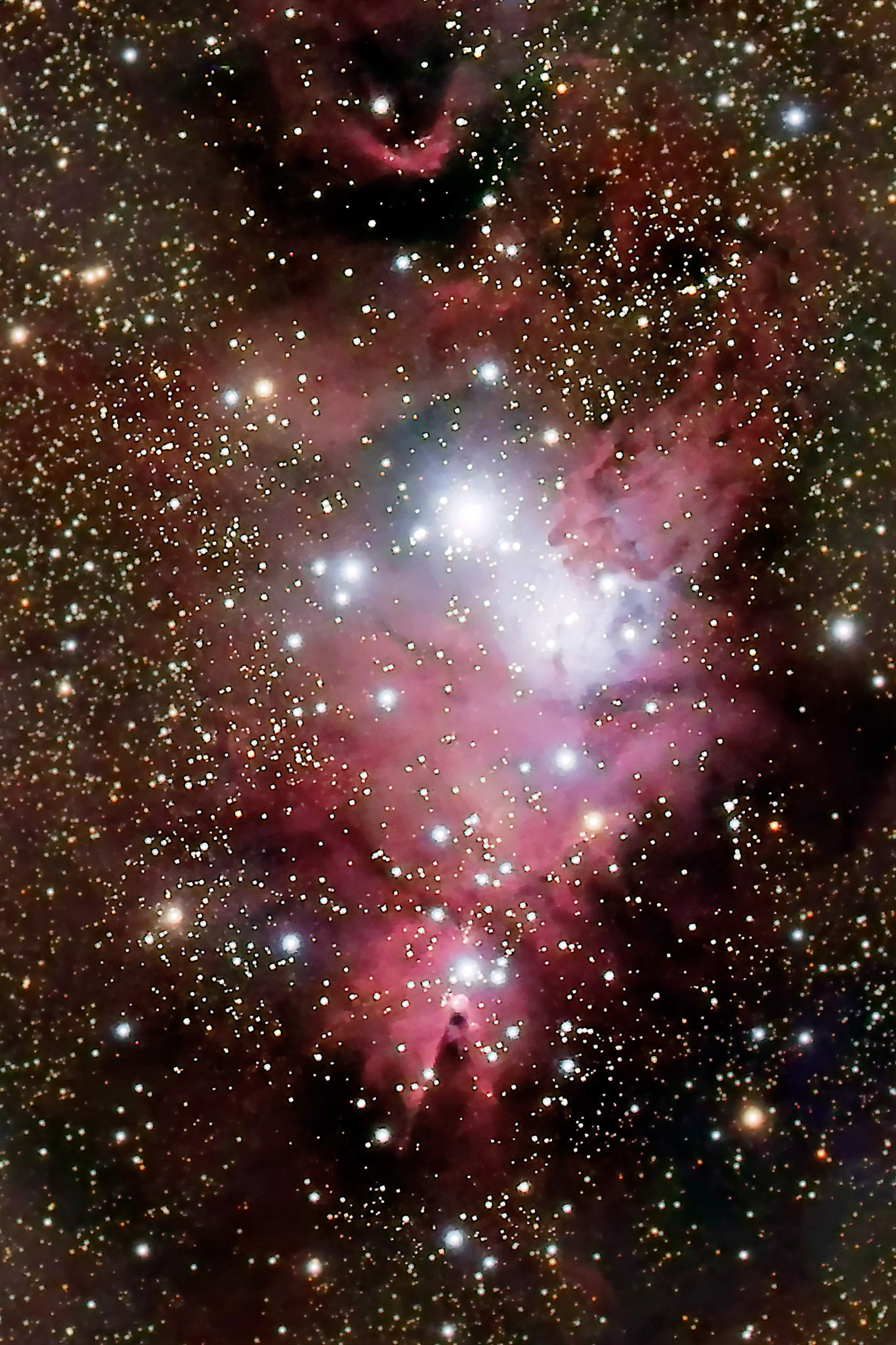
Christmas Tree Cluster
The Cone Nebula is an H II region in the constellation of Monoceros. The nebula is located 2,700 light-years away from Earth, and is 4 light years across. A ly is 5,878,600,000,000 miles!!
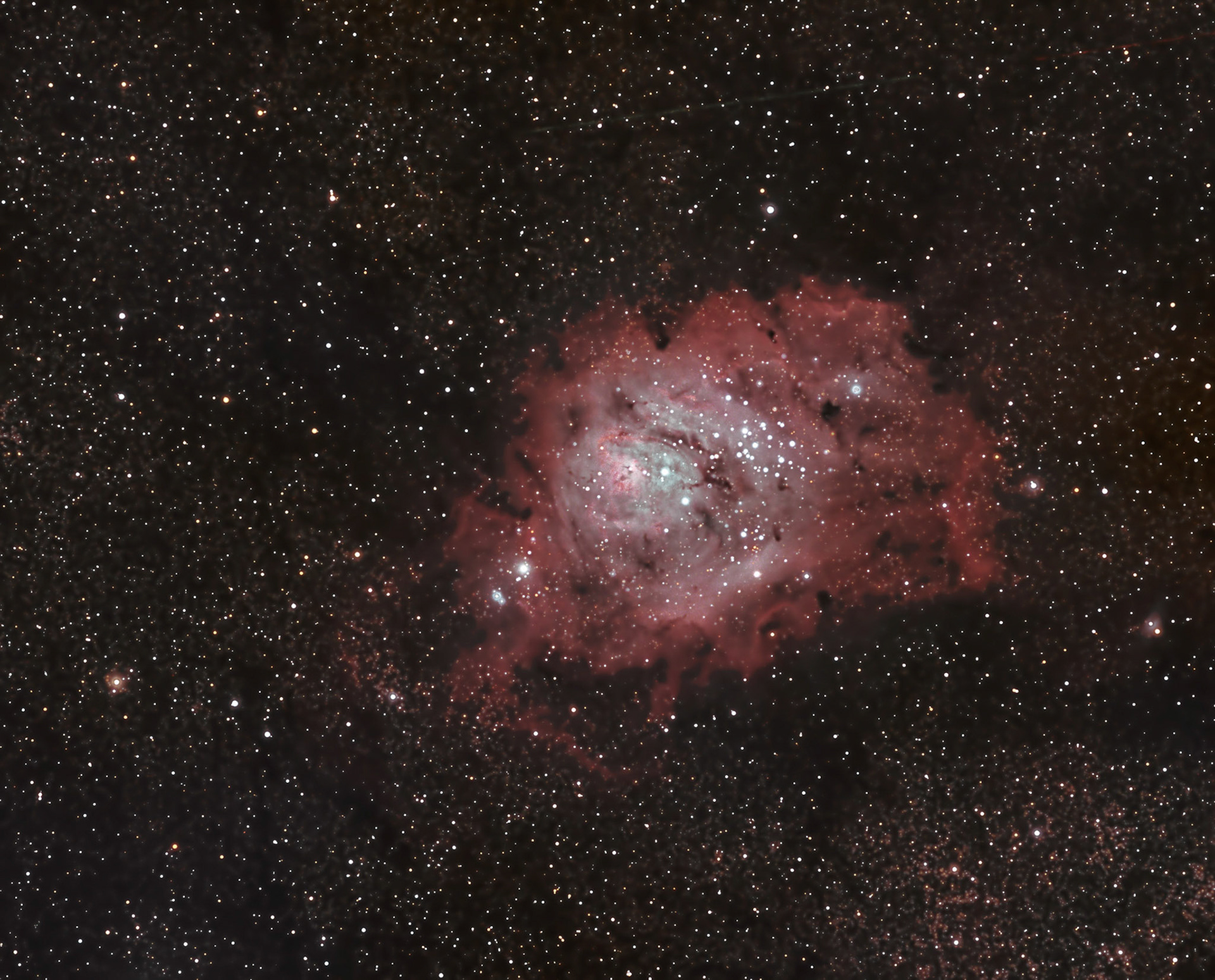
M8, the Lagoon Nebula. Mostly hydrogen gas, which is associated with star formation. Just over 4,000 light years from earth.
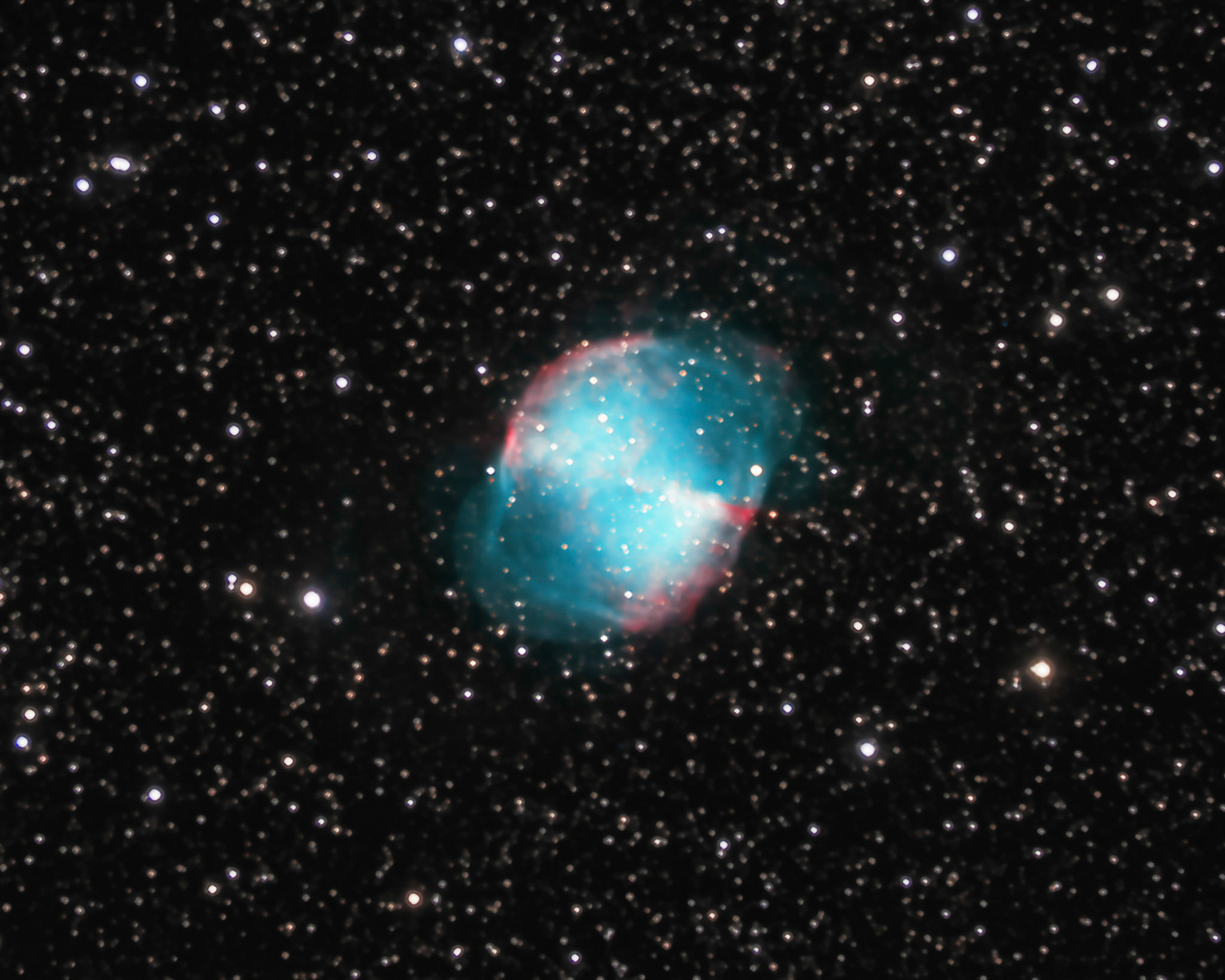
M27, the Dumbbell Nebula is a planetary nebula in the constellation Vulpecula, at a distance of about 1227 light-years. 8" SCT; ZWO 1600MM Pro — at Los Angeles Astronomical Society.
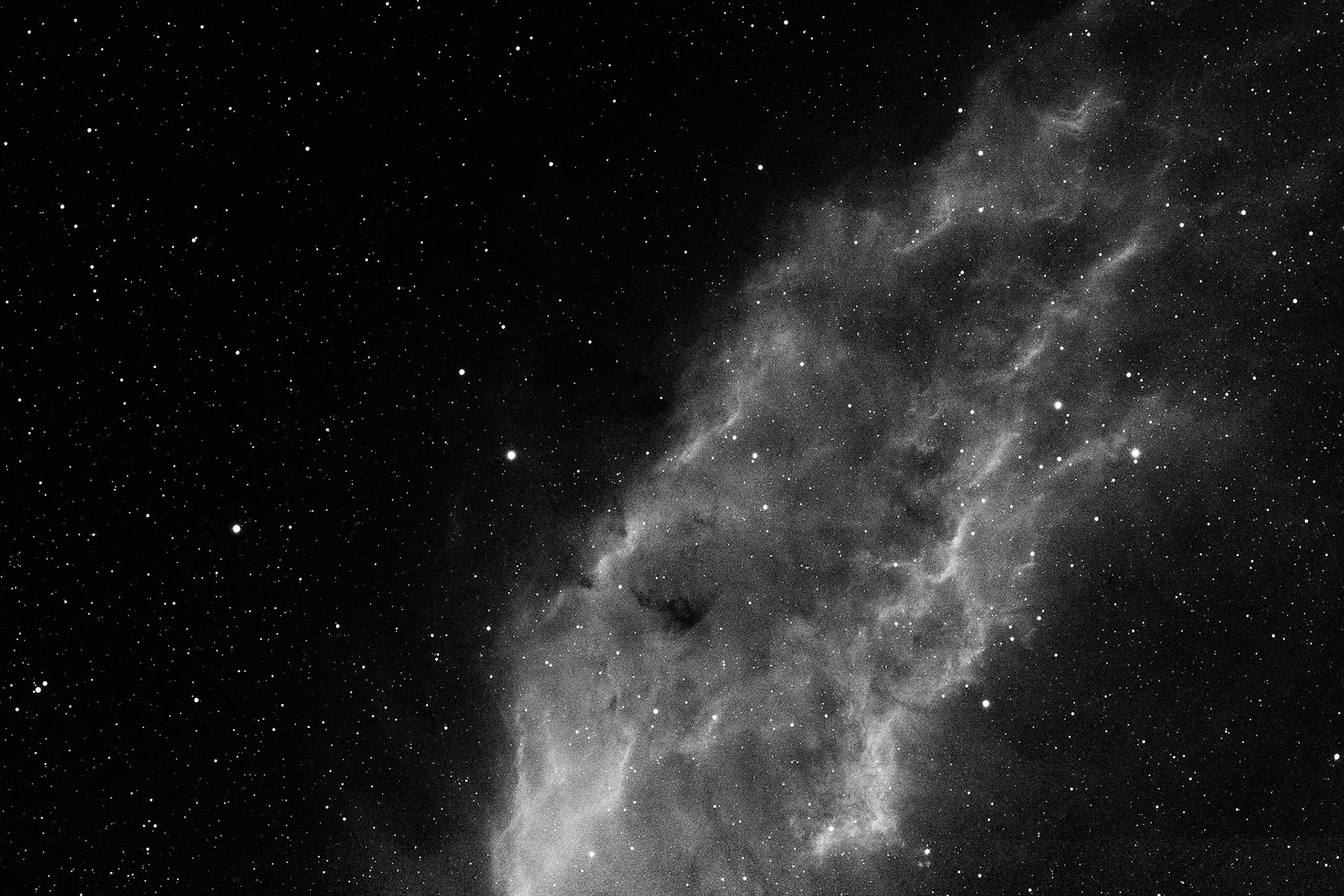
California Nebula in Ha
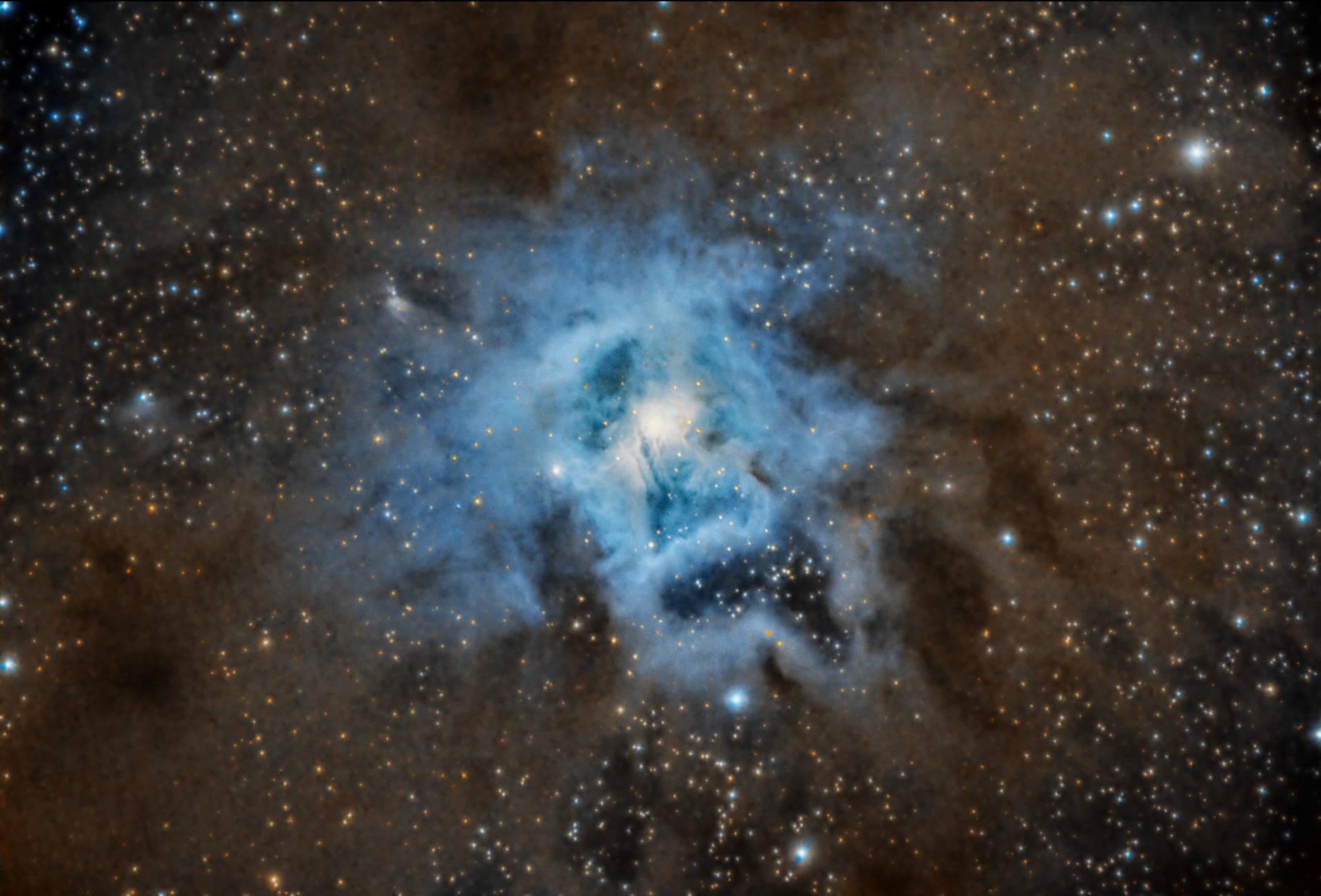
The Iris Nebula is a bright reflection nebula in the constellation Cepheus. The nebula, which shines at magnitude +6.8, is illuminated by a magnitude +7.4 star.
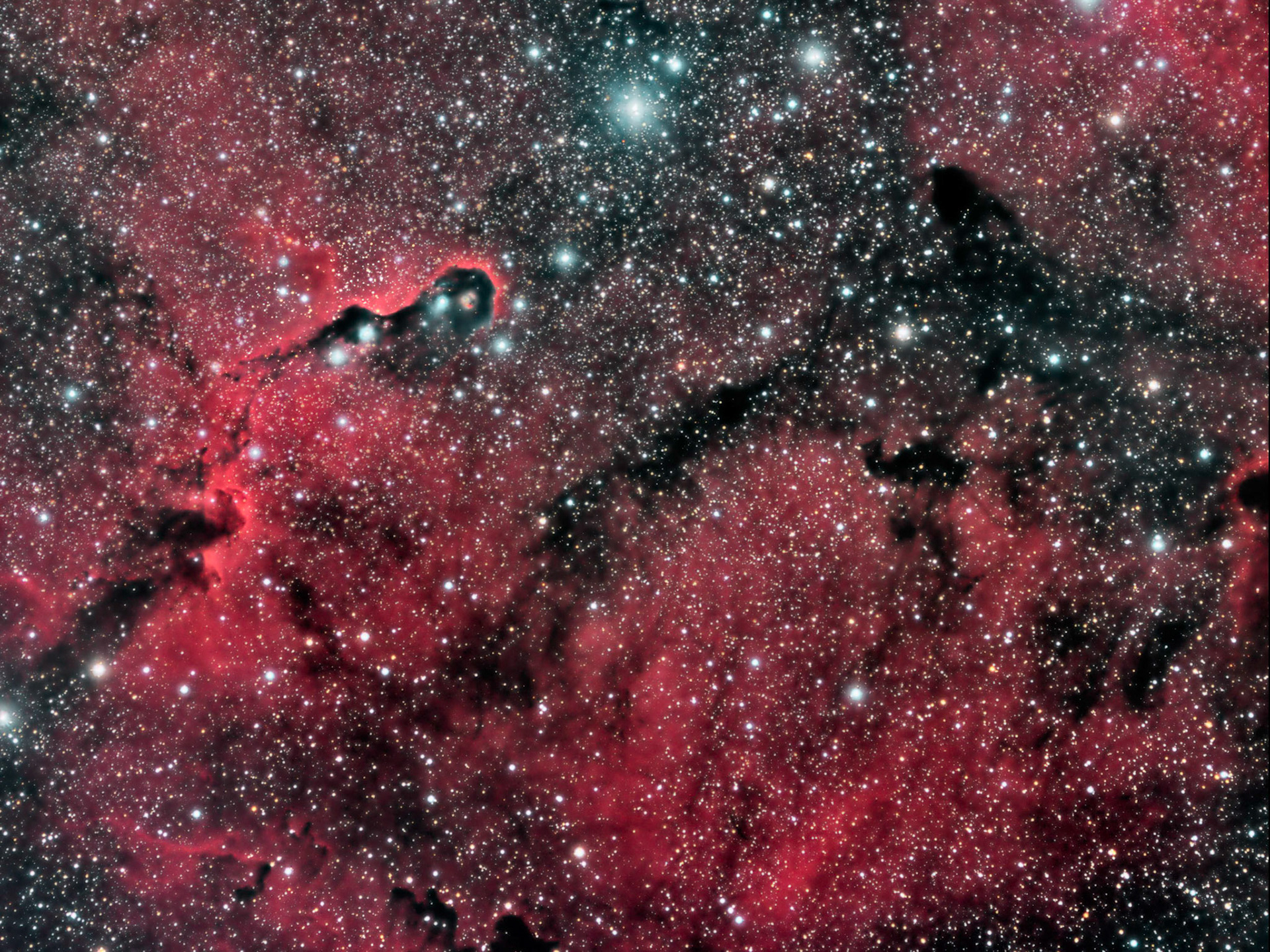
The Elephant's Trunk Nebula, near the upper left, is a concentration of interstellar gas and dust within the much larger ionized gas region IC 1396 located in the constellation Cepheus about 2,400 light years away from Earth.
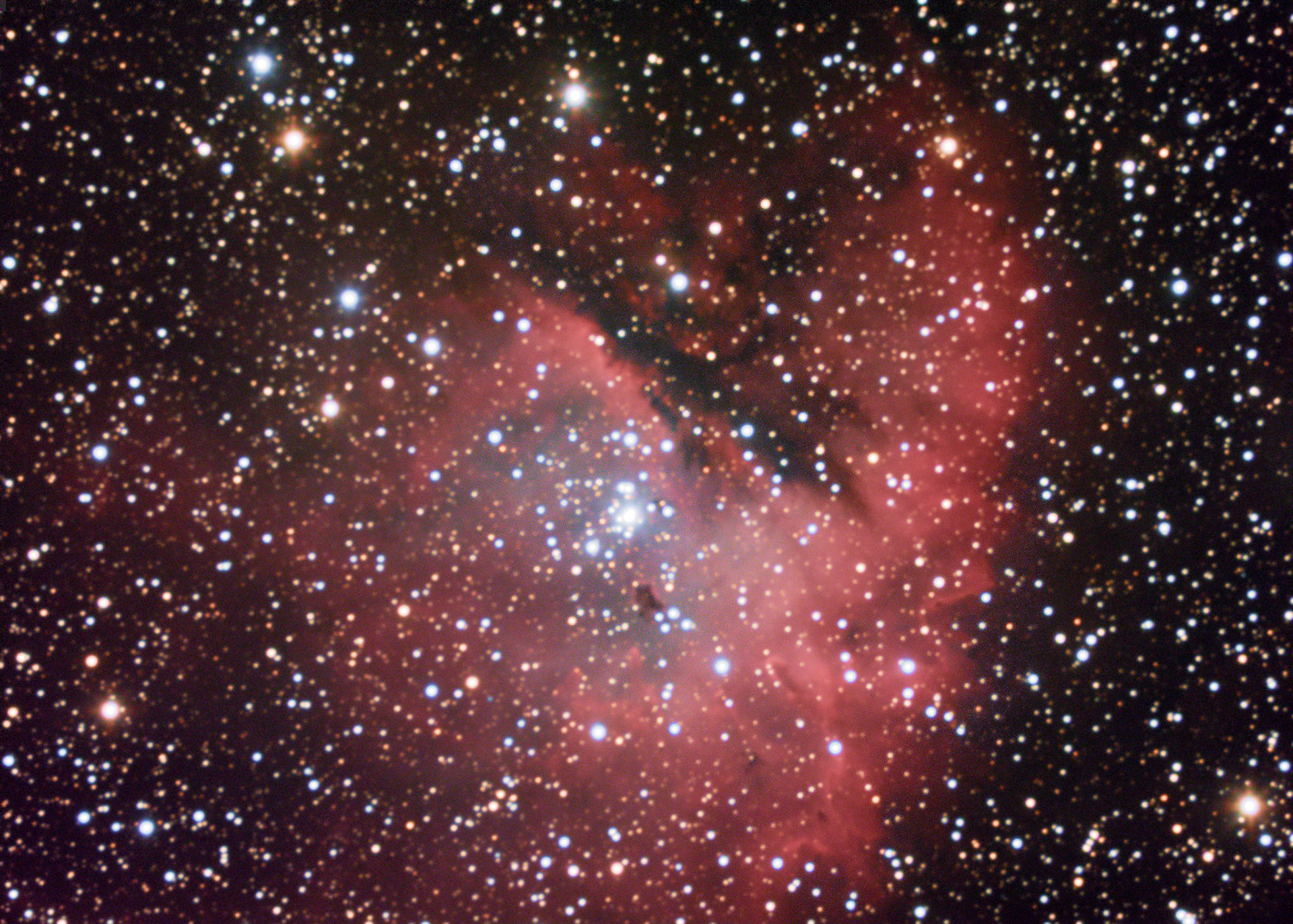
Pacman Nebula Taken with 8"SCT, ASI1600mm Pro and LRGB
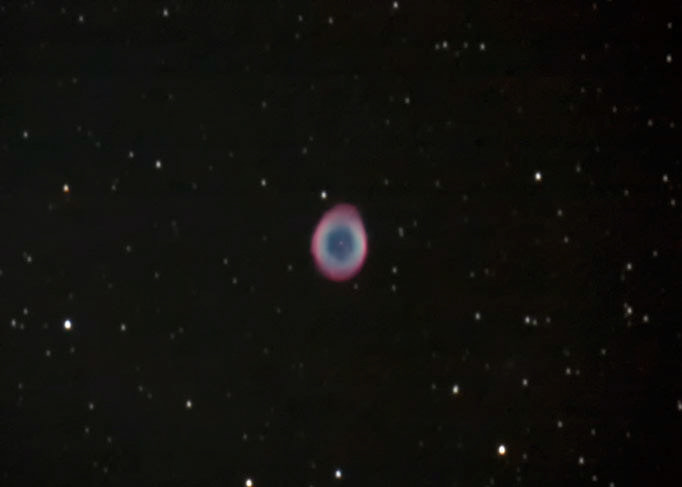
Ring Nebula
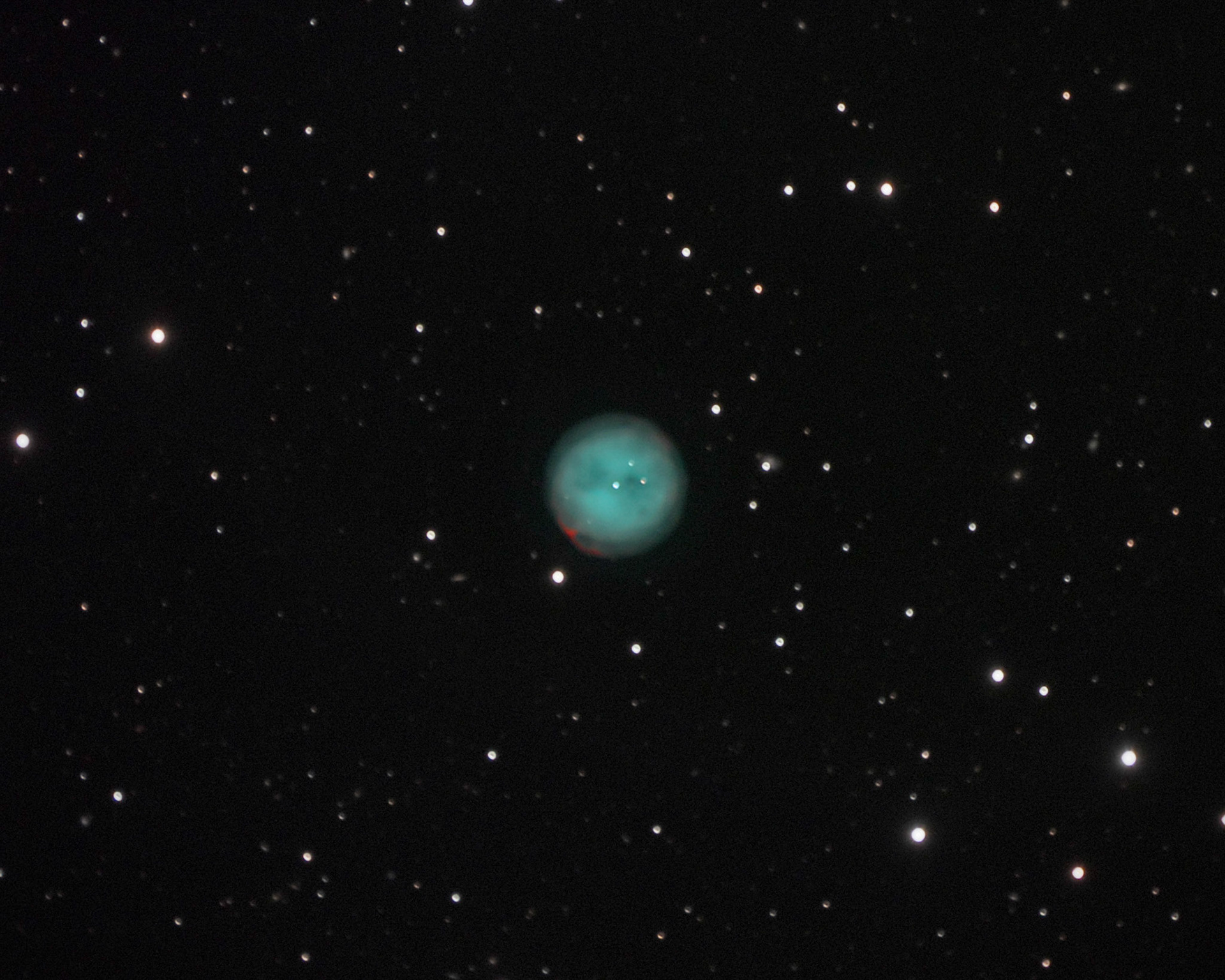
M97, the Owl Nebula — at Lockwood Valley, California.
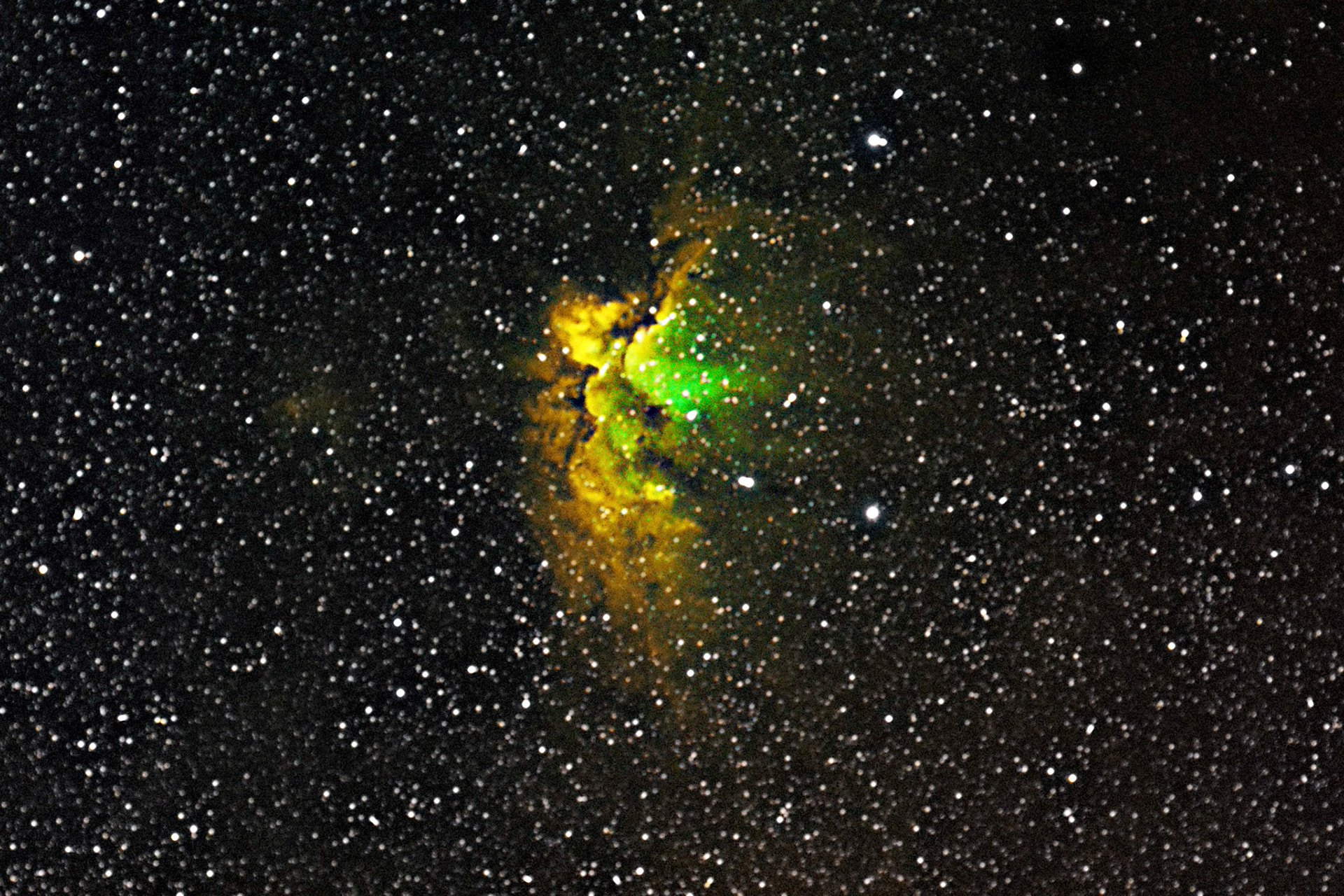
Wizard Nebula SW 80mm EDO Pro, ASI1600mm Pro, Ha/OIII/Si2 — in Bakersfield.